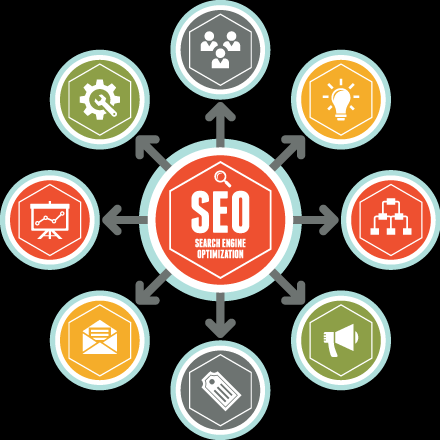
With the rise and consolidation of social media over the past 10 years, many predicted the beginning of the end for SEO. Experts believed this new way for users to interact would banish search engines from marketing strategies, as it opened a much more direct communication channel between brands and consumers. Not only has this prediction not come true, but improving search engine ranking on Google has become the top priority for organisations, according to a recent HubSpot study.
Moreover, while social media has ushered in a new form of interaction, it has also made it increasingly difficult for businesses to reach their target audience through these channels.
Successive algorithm changes on certain platforms — for example, the one intended to counteract the decline in personal information shared on Facebook — have harmed the visibility of commercial posts, thereby promoting family-related comments and images.
For this very reason, the reach of posts for corporate profiles has been reduced to residual percentages when it comes to non-sponsored content. Achieving higher organic ranking is a real puzzle for companies, who are forced to spend money to avoid going unnoticed.
Social media dynamics are not the only factor that has solidified SEO as one of marketers' top concerns. The exponential growth of mobile searches has also contributed to this: in fact, in October 2015 Google confirmed that worldwide they now exceed searches from computers.
Content and its distribution: the other concerns
The scenario described is reflected in the aforementioned HubSpot report, based on a global sample of marketing managers. When asked about their main priorities in inbound marketing — a field that could be defined as the set of marketing and advertising techniques that target users non-intrusively and provide value — respondents placed the need to improve SEO and organic presence at the top of the list.
This concern maintains the position it reached in 2015, confirming its growing prominence. What most concerned marketing departments in 2014 was content creation for the company's blog.
This latter objective — essential for ensuring good search engine ranking — remains one of the most valued, ranking second. The bronze medal goes to content publishing, distribution, and virality.
Outside the podium, in fourth position, we find marketing automation. This is followed by interactive content creation, long-form or premium content, a category that includes e-books; graphic content, infographic creation, online tools, and how-to videos, which close the list.
Free trials or subscriptions for tools disappear from this list (in the 2014 and 2015 editions, they occupied the last spot). Likewise, this time, there is no trace of webinars, which have progressively lost momentum: while they reached fourth place in 2014, they dropped to seventh place in 2015.
The importance of a strong SEO strategy
Although marketing managers worldwide show increasing interest in improving their search engine ranking, the truth is that only 1 out of 3 Spanish companies take action to improve SEO, according to a study conducted and presented by Nominalia in 2016.
A shocking reality, especially considering data from Chitika. In a study published on 25 May 2010, based on traffic arriving from Google into its ad network, the first search result drove 34.35% of visits; the second, 16.96%; and the third, 11.42%.
If you also want to improve your company's website SEO, we can help: contact us today or call us without obligation on 93 532 93 78. At ZDS Digital, your digital marketing agency in Barcelona, we have been helping SMEs and multinationals improve their online visibility since 2005. To show you that our support truly works, we invite you to explore these two success stories. Are you ready for your company to be next?
SEO in 2026: Beyond Keywords
What was a growing priority in 2016 is now, in 2026, an imperative need. SEO has evolved dramatically, moving from a matter of keyword density to a holistic discipline encompassing user experience, brand authority, and adaptability to new search methods. The emergence of conversational AI in search engines like Google (AI Overviews, rolled out to all users in the US on 14 May 2024) and tools like ChatGPT or Perplexity AI has redefined the landscape, making optimisation for direct answers and valuable content crucial.
According to BrightEdge's 2019 channel report, based on data from May 2019 and excluding direct traffic, organic and paid search together drove 68% of trackable website traffic, and organic search alone 53.3%. Despite the rise of social media, search remained the main source of traffic.
In our experience working with clients across various sectors at ZDS Digital, companies that consistently invest in a comprehensive SEO strategy not only improve their visibility but also build a foundation of trust and authority that resonates with the current demands of users and search algorithms.
E-E-A-T and Helpful Content: The Pillars of Trust
Google has strengthened its focus on content quality and reliability with the E-E-A-T principles (Experience, Expertise, Authoritativeness, Trustworthiness). This framework, crucial in Google's quality assessment algorithm, is more important than ever, especially with the proliferation of AI-generated content. By 2026, businesses must demonstrate:
- Experience: Does the content creator have first-hand experience on the topic?
- Expertise: Is the creator a recognised expert in their field?
- Authoritativeness: Is the brand or creator a go-to source in the industry?
- Trustworthiness: Is the content accurate, truthful, and safe for users?
Google launched the Helpful Content Update in August 2022 against content created primarily for search engine ranking rather than to help people. Since March 2024, that assessment has been part of its core ranking systems. This means content must be original, useful, and respond to actual user intent, not just keywords. A common mistake is generating massive content with AI without expert human supervision, often resulting in generic, low-value texts that Google detects and deprioritises. At ZDS Digital, we always advocate for a hybrid approach, where AI assists in creation, but human expertise validates and enriches the content.
Core Web Vitals and User Experience: INP as the New Standard
Speed and user experience (UX) are critical SEO factors. Core Web Vitals are LCP (Largest Contentful Paint), CLS (Cumulative Layout Shift) and INP (Interaction to Next Paint). On 12 March 2024, INP replaced FID (First Input Delay) as the interactivity metric. INP measures the latency of all user interactions on a page, offering a more comprehensive view of responsiveness.
Optimising these metrics not only improves SEO but also reduces bounce rates and increases conversions. A slow or difficult-to-use website frustrates visitors and leads them to seek alternatives. Tools like Google PageSpeed Insights or Lighthouse are indispensable for diagnosing and improving these aspects. We recommend our clients conduct regular Core Web Vitals audits, at least quarterly, to ensure optimal performance.
The Impact of GA4 and Privacy on SEO
The transition to Google Analytics 4 (GA4) as Google's sole analytics platform has significantly changed how businesses measure and understand user behaviour. GA4, focused on events and privacy, forces marketers to rethink their tracking and attribution strategies. The absence of historical Universal Analytics data and the need to correctly configure GA4 from scratch has been a challenge for many businesses. At ZDS Digital, we help our clients migrate and configure GA4, ensuring they continue to gain valuable insights for their SEO strategies.
Growing privacy concerns (GDPR, CCPA, etc.) compel businesses to adopt a "privacy-first" approach. Chrome, however, will not drop third-party cookies: Google abandoned that plan in July 2024 and in April 2025 decided to keep the current choice in the browser settings. This means a greater emphasis on first-party data, user consent, and building direct relationships with the audience. SEO, by focusing on attracting quality organic traffic, aligns perfectly with this trend, as it does not rely on third-party cookie-based segmentation.
Successful SEO Strategies in 2026: Quick Wins and Tools
To remain competitive in today's SEO landscape, it is essential to implement agile strategies and use the right tools. Here are some quick wins and tool recommendations:
SEO Quick Wins for 2026:
- Optimisation for conversational and AI searches: Structure your content with clear questions and answers. Use the "Frequently Asked Questions" (FAQ Schema) format and ensure your content can be easily summarised by an AI bot.
- Existing content audit: Review and update old content to ensure it meets E-E-A-T principles and is "helpful." Remove or improve low-quality content.
- Improve mobile speed: With mobile-first indexing, a fast and fluid mobile experience is non-negotiable. Compress images, minimise CSS/JS, and use a CDN.
- Advanced Schema Markup implementation: Use Schema.org to mark up structured data (products, reviews, events, etc.) and improve visibility in rich results (Rich Snippets).
- Strategic internal link building: Connect your content logically to improve the authority of key pages and user navigation.
Essential SEO Tools for 2026:
- Google Search Console: Indispensable for monitoring your site's performance on Google, identifying crawl errors, and seeing which queries drive traffic to your website.
- Google Analytics 4 (GA4): To understand user behaviour on your site, identify patterns, and measure the impact of your SEO efforts.
- SEMrush / Ahrefs: Comprehensive suites for keyword research, competitor analysis, site audits, ranking tracking, and backlink analysis. They are fundamental for a robust SEO strategy.
- Screaming Frog SEO Spider: A website crawling tool for technical SEO audits, identifying broken links, redirects, missing meta tags, etc.
- Surfer SEO / Clearscope: AI-powered content optimisation tools that analyse search results for a keyword and suggest how to improve your content to rank better.
- PageSpeed Insights / Lighthouse: To evaluate and improve your website's speed performance and user experience.
At ZDS Digital, we integrate these tools and methodologies into our strategies to offer our clients measurable and sustainable results. SEO is a continuous process of adaptation and optimisation.
Common SEO Mistakes to Avoid in 2026
Despite the evolution of SEO, some mistakes persist and can be very detrimental:
- Ignoring search intent: Focusing only on keywords without understanding what the user is truly looking for. Content must satisfy the intent, whether informational, transactional, or navigational.
- Low-quality or duplicate content: Publishing generic, copied, or AI-generated content without human review. Google prioritises originality and value.
- Neglecting mobile optimisation: A website that is not responsive or loads slowly on mobile devices will be penalised.
- Lack of a link-building strategy: Quality backlinks remain a crucial ranking factor. Ignoring link building or resorting to spam practices can be counterproductive.
- Not monitoring or analysing results: SEO is a continuous improvement cycle. Without data analysis (GA4, Search Console), it's impossible to know what works and what doesn't.
- Forgetting security (HTTPS): A website without HTTPS is not only insecure for users but also a negative ranking factor.
Avoiding these errors and adopting a proactive, user-centric approach is key to SEO in 2026 and beyond. At ZDS Digital, your digital marketing agency in Barcelona, we have been helping SMEs and multinationals improve their online visibility since 2005. If you want your company to not only survive but thrive in this constantly changing digital environment, contact us today or call us without obligation on 93 532 93 78. Are you ready for your company to achieve success?
