Skip to content

Glossary Pogo-sticking

What Is Pogo-Sticking?

  • Analytics
Definition

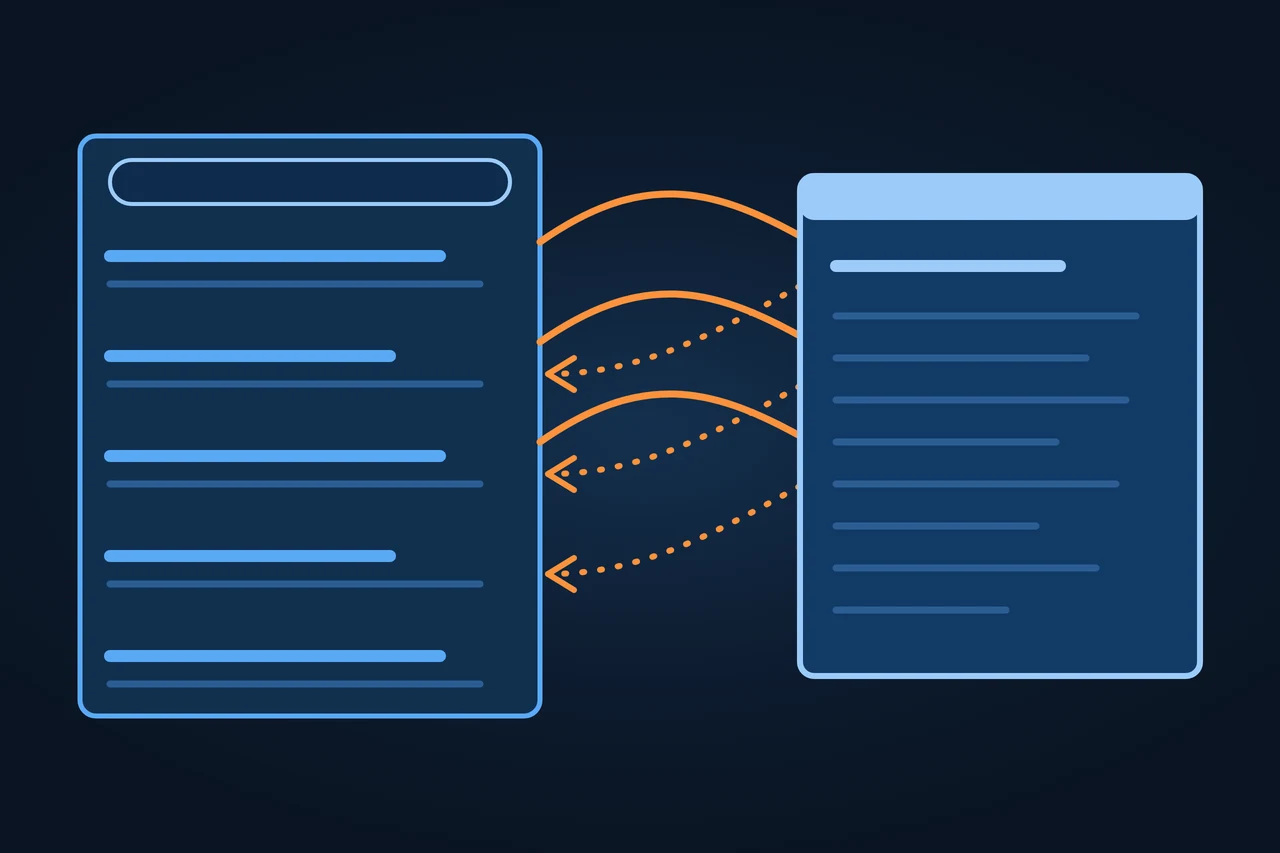
Pogo-sticking is a searcher bouncing between search results: they open a page, return to the Google results list shortly after and click a different result. That is how Ahrefs defines it, and the pattern is read as a sign that the first page did not answer the query. The name comes from the spring-loaded toy, but this entry is about search behavior, not the toy.

On the left, a results page with five results; three times, an orange line runs from a result to a page on the right and comes straight back, dotted, to the next result, on a dark blue ground.
On this page 11
  1. Origin of the term
  2. How it works
  3. Examples
  4. How to measure it
  5. Advantages and disadvantages
  6. How it differs from related concepts
  7. Criticism and limits
  8. How to apply it, step by step
  9. Best practices
  10. Common mistakes
  11. How this entry was made
In brief

Pogo-sticking: a searcher opens a result, jumps straight back to Google and clicks another. Causes, measurement and what Google says.

On the left, a results page with five results; three times, an orange line runs from a result to a page on the right and comes straight back, dotted, to the next result, on a dark blue ground.

Origin of the term

The image is the pogo stick: the user hops onto a page and lands straight back on the list. In usability, Jared Spool used the term for users who jump up and down a site's hierarchy without finding what they want (talk "The Secret Lives of Links", recorded in November 2012). In SEO, Rand Fishkin covered it in Moz's Whiteboard Friday "Solving the Pogo-Stick Problem" on August 23, 2013. Nielsen Norman Group described the pattern in 2015 and noted that it is often discussed in connection with people returning to an external search engine.

How it works

The pattern has three steps: a click on a result, a quick return to the SERP, and a click on another result.

Which of these three shows up in your GA4 reports?

The causes usually cited sit on the landing page:

  • The page doesn't match the search intent: someone looking for a price gets a guide, or the other way round.
  • The answer is far down the page and not visible on arrival.
  • The page loads slowly or is crowded with pop-ups and ads.
  • The title or description in the result promises something the page doesn't deliver. Clickbait is the extreme case.

Nielsen Norman Group puts it as a mismatch between what the link promised and what the user finds on arrival.

One case looks identical and isn't a failure. People comparing prices, reviews or spec sheets open several results on purpose. John Mueller made this point in 2018 when asked about the pattern: users go back and forth for many reasons. From the outside, the two behaviors look the same.

Examples

Someone searches "how to clean an induction hob". The first result is a shop page for cleaning products with no instructions, and they are back within five seconds. The second result shows the steps at the top of the page, and they stay. For the first result that was pogo-sticking; for the second, a successful visit.

A different case: someone searches "cheap trail running shoes" and opens four shops one after another to compare them. The pattern is the same, but no page failed here, because comparing was the goal.

How to measure it

You can't measure it directly. Only Google sees the return to its results list, and it doesn't report it in any tool. What you can use are indirect signals:

  • In Search Console, organic CTR per query. Search Console counts a click when a result sends the user outside Google Search; what the user does next isn't in the report.
  • In Google Analytics 4, engagement rate and bounce rate for sessions from organic search. Google's help page says "The bounce rate is the opposite of the engagement rate". A session counts as engaged if, among other criteria, it lasts longer than 10 seconds.

A worked example with round numbers: a page gets 1,000 organic visits a month for one query, and 70% of the sessions are not engaged. That tells you many visits end quickly. It doesn't tell you how many of those visitors went back to Google and opened another result.

Advantages and disadvantages

As a concept, pogo-sticking is useful. It describes, from the user's side, what goes wrong on a page that wins clicks and fails to hold them, and it pushes the analysis toward search intent rather than keywords. As a metric it is weak. Nobody outside Google can count it, and deliberate comparison shopping looks exactly like a disappointing page.

How it differs from related concepts

TermWhat happensWho can measure it
Pogo-stickingClick, quick return to the SERP, click on another resultOnly the search engine
Bounce rateA session without engagement, wherever the visitor came fromYour analytics (GA4)
Dwell timeTime between the click on the result and the return to the SERPOnly the search engine

Source: Google Analytics Help, "Engagement rate and bounce rate"; Bing Webmaster Blog, August 2, 2011 (accessed 10.11.2026).

Criticism and limits

On whether Google uses pogo-sticking for ranking, two kinds of sources give different answers.

Google has said no. In a webmaster hangout in July 2018, John Mueller answered a question about this pattern: "We try not to use signals like that when it comes to search." There are many reasons for going back and forth, he said, so it is "really hard to refine" into a ranking factor. That is Search Engine Journal's transcript of July 16, 2018. In a Reddit Q&A on February 8, 2019, Gary Illyes went further and dismissed dwell time and CTR as baseless theories.

Against that stands a court ruling. In the antitrust case United States v. Google LLC, Judge Amit Mehta found on August 5, 2024, based on witness testimony including from Google employees, that the Navboost ranking system remembers which documents users clicked after entering a query and is trained on 13 months of user data (before 2017: 18 months). Google itself also writes on its How Search Works pages that it uses "aggregated and anonymized interaction data to assess whether search results are relevant to queries".

Both can be true at once. Google uses clicks in its ranking systems, and no primary source says whether a quick return to the results list counts as a signal of its own there. The internal documents leaked in May 2024 include fields such as "goodClicks" and "badClicks" in a Navboost module. On May 29, 2024, Google cautioned against assumptions based on "out-of-context, outdated, or incomplete information", and a field name says nothing about how the field is used.

How to apply it, step by step

  • Search the query yourself and look at the page type at the top: guide, comparison, product page or shop.
  • Check whether your page is that type, or whether the query needs a separate page.
  • Put the answer where visitors see it on arrival, without scrolling.
  • Read the title and description as a searcher sees them on the SERP and check that the page delivers what they promise.
  • Check loading on mobile and remove anything that covers the content on arrival.

Best practices

  • Look in Search Console for queries with a good position and low CTR, and in GA4 for organic landing pages with low engagement. Those are your candidates.
  • Judge each query on its own, because a comparison query produces back-and-forth even when the page is good.
  • Improve the page for the people who visit it, not for a signal you can't measure.

Common mistakes

  • Treating GA4 bounce rate as if it were pogo-sticking.
  • Claiming Google penalizes pogo-sticking: no primary source says so.
  • Claiming the opposite, that Google uses no click data at all: the 2024 ruling says otherwise.
  • Padding the text to keep visitors longer instead of giving them the answer sooner.

How this entry was made

This entry was written in November 2026 with AI assistance. The facts come from the ruling in United States v. Google LLC, the Google Analytics and Search Console help pages, Search Engine Journal's transcript, and Internet Archive copies of Reddit and the Bing blog. It was reviewed before publication and contains no client data.

Manuel Riveiro Rodriguez CEO & Digital Strategist

A technical audit covers this and everything else in one pass.

Request an audit

Frequently asked

Is pogo-sticking a Google ranking factor?

John Mueller said no in 2018. A court ruling from August 2024 found that Google uses click data in its Navboost system, but it doesn't say whether a quick return to the results counts as a signal of its own.

What is the difference between pogo-sticking and bounce rate?

A bounce is a session without engagement on your site, wherever the visitor came from, and your analytics measures it. Pogo-sticking is the return to the Google results list and the click on another result, which only the search engine sees.

Can I see pogo-sticking in Google Analytics?

No. Google Analytics only sees what happens on your site and doesn't know whether the visitor went back to Google. Engagement rate for organic landing pages and CTR per query in Search Console are the closest indirect signals.

Is it pogo-sticking or pogo sticking?

Both spellings appear. Ahrefs and the Search Engine Journal headline on Mueller's statement use the hyphen, Nielsen Norman Group writes "pogo sticking" without it.

Sources

  1. Search Engine Journal, "Google Does Not Use Pogo-Sticking As a Ranking Factor", July 16, 2018. Transcript of John Mueller.
  2. Google Search Central, English Google Webmaster Central office-hours hangout, published July 20, 2018, from 51:18.
  3. Gary Illyes, r/TechSEO AMA, February 8, 2019, Internet Archive copy.
  4. United States v. Google LLC, No. 1:20-cv-03010, Memorandum Opinion, August 5, 2024, p. 41, finding 96. Navboost.
  5. Google, How Search Works, "Ranking results". Interaction data.
  6. The Verge, Google's statement on the leaked documents, May 29, 2024.
  7. Leaked Content Warehouse documentation, module QualityNavboostCrapsCrapsData.
  8. Google Analytics Help, "Engagement rate and bounce rate".
  9. Search Console Help, "What are impressions, position, and clicks?".
  10. Moz, Rand Fishkin, "Solving the Pogo-Stick Problem", Whiteboard Friday, August 23, 2013.
  11. Nielsen Norman Group, Aurora Harley, "No More Pogo Sticking: Protect Users from Wasted Clicks", April 12, 2015.
  12. UIE, Jared Spool, "The Secret Lives of Links", recorded November 2012.
  13. Bing Webmaster Blog, Duane Forrester, "How To Build Quality Content", August 2, 2011, Internet Archive copy. Dwell time.
  14. Ahrefs, "Pogo-Sticking in SEO: What It Is & What to Do About It". Definition.