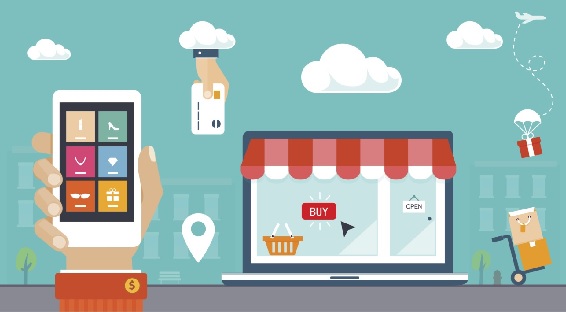
According to the National Commission for Markets and Competition (CNMC), only 1 in 5 Spanish businesses offer the option to purchase their products online. This statistic is not only due to retailers' reluctance but also consumers' reservations. For example, in 2014, information released during the European Consumer Summit in Brussels revealed that 50% of Europeans still did not trust e-commerce platforms for their purchases.
Despite this, e-commerce figures continue to grow at a healthy pace year on year (around 27% interannually, according to the CNMC). For 2016, The Boston Consulting Group predicted that online sales in Spain would reach €24.7 billion.
What was an emerging trend in 2014-2016 is now, in 2026, a consolidated and unavoidable reality. Growth forecasts fell short, and the COVID-19 pandemic drastically accelerated e-commerce adoption. According to Statista, the e-commerce market in Spain is expected to reach a market volume of over €60 billion by 2026, with user penetration exceeding 80%. Ignoring the online channel is no longer an option; for many businesses, it's a death sentence.
Why Invest in E-commerce?
This increasing trend is not the only reason retailers should take the leap onto the World Wide Web. To prove it, here are 10 reasons why any physical store should offer online purchasing. Pay attention!
1) It helps reduce operating costs…
Having a physical commercial establishment incurs fixed monthly expenses: for example, rent (or IBI, if the store operates in an owned premise), utilities (water and electricity), staff… This outlay contrasts with the price of reserving a domain for a website (from about €12 per year, plus the cost of the hosting provider, which can even be free). In turn, this also impacts the final product price, making it much more competitive and attractive to the buyer.
In our experience working with SMEs in Barcelona, cost optimisation is a key factor. A well-managed e-commerce can significantly reduce the need for large in-store sales teams or extensive showroom spaces. Furthermore, automating processes like order processing, invoicing, and initial customer service via chatbots (e.g., with tools like LiveChat or Intercom) can free up human resources for higher value-added tasks.
2) …and storage costs
Storing all or part of the products for sale in warehouses is often more economical than storing stock in a physical store, especially if the latter is located in a central or commercial area, which significantly increases the cost of renting the premises.
Dropshipping or outsourced warehouse management (3PL) models are increasingly popular options that allow physical stores to expand their online catalogue without investing in large, proprietary storage infrastructure. Platforms like Shopify or WooCommerce easily integrate with dropshipping providers, facilitating this transition. Moreover, inventory digitisation enables more efficient management, reducing the risk of overstock or stockouts, which translates into considerable savings.
3) It limits product promotion costs
Listing products online is significantly cheaper than printing (and distributing) a traditional catalogue.
Digital advertising, while requiring investment, offers a level of targeting and measurement that traditional media cannot match. Tools like Google Ads, Meta Ads, or TikTok Ads allow you to reach specific audiences with personalised messages, optimising your Return on Investment (ROI). For example, a well-designed email marketing campaign with Mailchimp or Klaviyo can generate an ROI of up to 42:1, according to recent 2024 studies. Furthermore, SEO (Search Engine Optimisation) is a long-term strategy that, with an initial investment, can continuously and freely generate high-quality organic traffic.
4) It increases product visibility
According to a Nielsen consultancy study presented in August 2014, 52% of Spaniards search for product information online before purchasing in a physical store, a figure that Deloitte some years ago raised to 80% for the United States (these online consultations prior to in-store purchase are called webrooming). Hence the importance of any business having a virtual shop window: undoubtedly, a perfect option to increase the number of potential buyers.
Today, in 2026, webrooming is the norm. A 2025 Statista study indicates that over 85% of Spanish consumers research online before making a purchase, whether online or in a physical store. Online presence is not limited to a store but extends to a digital ecosystem that includes social media, blogs, reviews, and increasingly, generative artificial intelligence. With the advent of AI Search (such as Google's or Perplexity's conversational search experiences), it is crucial that product information is accurate, detailed, and optimised to be found and summarised by these tools, as many users will get answers directly from AI without visiting the website. Optimisation for E-E-A-T (Experience, Expertise, Authoritativeness, Trustworthiness) is more important than ever to ensure your content is considered reliable by algorithms.
5) It allows you to leverage social media synergies social media
As detailed in the Social Media 2016 study by IAB Spain, 15.44 million people in our country use social media. This resource, which can be free for businesses, allows for sending a high volume of potential traffic to the e-commerce platform. Furthermore, it is an excellent customer service channel, as well as a valuable tool for interaction and for better understanding buyers' opinions and satisfaction levels.
In 2026, the number of social media users in Spain exceeds 30 million, according to IAB Spain 2025 data. Platforms like Instagram, TikTok, Facebook, and Pinterest are not only communication channels but also powerful direct selling platforms (social commerce). Integrating product catalogues into these social networks allows users to buy without leaving the app. Additionally, User-Generated Content (UGC) and influencer collaborations are social marketing strategies that build trust and credibility. Monitoring social conversation with tools like Brandwatch or Sprout Social is essential to understand brand perception and react quickly to customer comments.
6) It helps expand your market
While the potential customers of a physical establishment are limited to people living or working nearby, an online store can reach internet users anywhere in the world. Therefore, e-commerce is perfect for saying goodbye to geographical limitations.
The globalisation of commerce is a reality. A well-configured online store can sell nationally and internationally. This involves considering aspects such as international shipping logistics, customs regulations, and cross-border payment methods. Platforms like Stripe or PayPal facilitate international transactions, while shipping services like DHL or FedEx offer logistics solutions. At ZDS Digital, we have helped clients expand their market to neighbouring countries like France and Portugal, seeing a significant increase in their sales by eliminating geographical barriers.
7) It can be available in numerous languages (with very little investment)
Can you imagine the costs of having employees prepared to serve customers in person in several languages? Now, compare that figure with the cost of translating an online store's catalogue into various languages just once. The greater the language offering, the greater the number of potential customers.
Translating an e-commerce site is more accessible than ever. Automatic translation tools like DeepL or Google Translate, combined with human review, can offer multilingual versions of the website at a reasonable cost. Furthermore, CMS platforms like WordPress with plugins such as WPML or Shopify with its internationalisation features, facilitate content management in multiple languages. It is crucial not only to translate the content but also to adapt the marketing strategy and payment methods to the cultural specificities of each market. A common mistake is not considering local currencies or preferred payment methods in each country, which can frustrate a purchase.
8) It offers a commercial outlet for seasonal remnants
Online outlets are an excellent option for selling individual units. Furthermore, you can seek partners to speed up the process (for example, Groupon).
Beyond outlets, e-commerce allows for the agile and effective implementation of flash sales, bundles, or stock clearance strategies. Platforms like Privalia or Veepee (formerly Vente-Privée) are examples of how the online outlet model has evolved. For physical stores, integrating these offers into their own e-commerce or through marketplaces can be an effective way to monetise unsold inventory, reduce losses, and free up space for new collections. The key lies in clear communication and audience segmentation for these offers.
9) Online shopping is a widespread habit in our country
According to a report presented last year by IAB Spain, online shoppers make an average of 2.8 purchases per month, spending an average of €70 per transaction per user. In 2016, according to eMarketer forecasts, around 42% of Spaniards would already be shopping online, equivalent to 19.5 million people.
In 2026, online shopping habits are fully ingrained. According to the Observatorio Cetelem e-Commerce 2025, the average spend per online purchase has increased to over €100 per transaction, and the purchase frequency is even higher. Consumers expect a fluid, fast, and personalised shopping experience. E-commerce implementation must focus on User Experience (UX) and optimising the checkout process. A purchasing process with too many steps or friction points can lead to cart abandonment, a problem affecting over 70% of e-commerce sites, according to the Baymard Institute in 2024. Strategies such as guest checkout, form auto-completion, and clear display of shipping costs are crucial.
10) It promotes retargeting
According to Nielsen, half of Spaniards who buy online have previously visited a physical store to examine the product, a practice known as showrooming. Therefore, not having an e-commerce platform can mean losing a significant volume of potential buyers, especially if they are unwilling (or unable) to travel to the physical establishment a second time.
Showrooming and webrooming are two sides of the same coin in today's omnichannel shopping experience. E-commerce allows you to close the loop. If a customer visits the physical store, looks at a product but doesn't buy it, we can use digital retargeting strategies to show them that same product online later, perhaps with an incentive. This is achieved through data collection (with user consent, respecting privacy and GDPR) and the use of advertising platforms like Google Ads or Meta Ads. Furthermore, integrating loyalty programmes that work both online and offline (e.g., earning points for purchases across both channels) strengthens customer relationships and encourages repeat purchases.
The Role of Data and Analytics in Modern E-commerce
Beyond the 10 points above, e-commerce offers an unparalleled advantage: the ability to collect and analyse data. With the transition to GA4 (Google Analytics 4), businesses can gain a much deeper insight into user behaviour, from acquisition to conversion and retention. This allows for data-driven decisions to optimise the website, personalise offers, and improve the customer experience. For example, identifying abandonment points in the purchase funnel, products most viewed but not purchased, or the most effective marketing channels. This information is pure gold for business growth.

The Importance of User Experience (UX) and Technical Performance
In today's competitive environment, an online store must not only be functional but also offer an exceptional user experience. This includes intuitive design, easy navigation, and, crucially, impeccable technical performance. Google's Core Web Vitals, which now include INP (Interaction to Next Paint) as a primary interactivity metric since March 2024, are key factors for SEO and user retention. A slow or difficult-to-use website will frustrate visitors and make them leave. Tools like Google PageSpeed Insights or Lighthouse allow you to audit and improve these aspects. At ZDS Digital, we place a strong emphasis on optimising speed and usability to ensure our clients not only attract traffic but also convert it.

Common Mistakes When Launching an E-commerce and How to Avoid Them
- Not defining a clear target audience: Without knowing who you're selling to, it's difficult to create an effective offer and message.
- Ignoring SEO: Launching a store without SEO optimisation is like opening a physical store on a dead-end street. No one will find you.
- Neglecting logistics: Problems with shipping, returns, or stock management can destroy your reputation.
- Poor mobile experience: Over 70% of online traffic comes from mobile devices (Statista 2025). A non-responsive website is commercial suicide.
- Not investing in marketing: An e-commerce doesn't sell itself. It needs constant promotion.
- Uncompetitive or unclear pricing: Surprises in shipping costs or higher prices than competitors scare customers away.
- Ignoring reviews and customer service: Online reputation is vital. Unanswered bad reviews can be devastating.
To avoid these mistakes, strategic planning, adequate investment in development and marketing, and a customer-centric approach are fundamental. Having an expert digital marketing team can make the difference between success and failure.
Are you considering selling online?
Despite the countless advantages of launching an online store, this project requires considering numerous technological aspects and those related to User Experience (UX). A website design with too many distracting elements, lengthy forms, ineffective Calls-to-Action (CTAs), or conversion leakage points can drastically reduce the site's Conversion Rate.
If you need guidance to launch your e-commerce portal, contact us or call us on 93 532 93 78. At ZDS Digital, your digital marketing agency in Barcelona, we will advise you without obligation. Trust our experience and let us help you create a profitable and effective online store, optimised for the challenges and opportunities of 2026. We look forward to hearing from you!