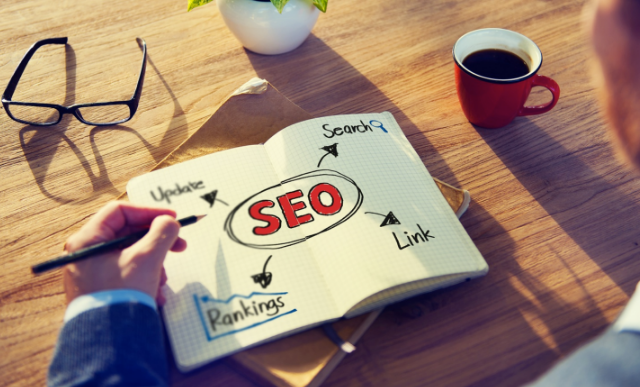
When optimising a website for on-page SEO, the meta description is often overlooked. We should all pay much more attention to this: it doesn't directly influence Google's results, but it does indirectly. The more clicks it generates for your website, the better its ranking in search results.
For this reason, and to assist you in this task, today we offer 6 tips for creating an effective meta description, based on recommendations from Yoast consultant Michiel Heijmans, as reported by Search Engine Journal.
What is a meta description and what is its purpose?
A meta description is a snippet of up to 158 characters — though sometimes exceeding 200 characters — that summarises a webpage's content. In search results, it appears directly below the page title, letting users know what type of content they'll find if they click the link.
From an HTML perspective, the description is a tag using the following code:
<meta name=»description» content=»Page description, usually one or two sentences.»/>
The purpose of the meta description is straightforward: its main goal is to encourage Google users to click on the link. These elements aim to generate clicks, which can ultimately improve the webpage's ranking in search engines.
Although the Palo Alto company states that meta descriptions do not affect its search rankings, they can indirectly influence this factor. Google uses click-through rate (CTR) information to determine if the webpage is a relevant result for the search query. Therefore, the more people who click on it, the higher it will rank in the search results list (SERP).
Hence the importance of optimising this aspect.
In 2026, with the evolution of conversational search and the integration of AI into search engines (such as Google SGE, ChatGPT, and Perplexity), the meta description gains an additional nuance. While AI can synthesise information directly, a well-crafted meta description remains crucial for capturing attention in traditional results and guiding users to the most relevant content. Furthermore, it helps AI better understand the page's context, which can influence how your content is presented in generative responses.
How to write a good meta description
Considering the details above, here are 6 tips to help you create effective meta descriptions.
1) Aim for a length between 135 and 147 characters
There's no single ideal number, as the final appearance of the meta description depends on additional information Google chooses to add (e.g., the search engine might display the article's publication date). Therefore, it's advisable not to exceed the maximum recommended length (158 characters) and to opt for texts between 135 and 147 characters. Additionally, if you're writing in a Romance language (like Spanish, French, Catalan, etc.) or a Slavic language, remember that accented letters are special characters, meaning they might occupy four or five spaces in HTML code instead of one.
In 2026, optimal length remains a subject of constant debate and adaptation. Google dynamically adjusts the displayed length in SERPs, often based on the user's device and query type. At ZDS Digital, we've observed that Google can display up to 200-220 characters on certain occasions, especially on desktop devices. To ensure the main message isn't truncated, concentrating the most important information within the first 120-130 characters remains good practice. Tools like Yoast SEO or Rank Math offer previews to help you see your meta description in search results.
2) Don't hesitate to use imperative verbs
The goal of any meta description is to make search engine users click on the page link, so a call-to-action (CTA) can be a crucial ally. Try not to overuse exclamation marks, as excessive use could lead to penalties from Google. Phrases like “discover more” or “get more information” often yield excellent results.
In our experience at ZDS Digital, clear and concise CTAs such as «Discover how…», «Learn to…», «Get your [benefit] now», or «Explore our collection» have consistently demonstrated better performance. A 2024 Semrush study indicated that meta descriptions with an explicit CTA can increase CTR by up to 15% compared to those without, especially in e-commerce and service sectors. The CTA must be relevant to the page's content and set an expectation that is then met, thus avoiding an increase in bounce rate.
3) For a commercial product, include basic features
For example, if the webpage is about an appliance or electronic item, the meta description should include fundamental technical specifications: brand, power, colour, price, etc. If the visitor is looking for that exact product, you might not even need to convince them. Furthermore, an attractive price significantly increases the chances of getting the click. You can also incorporate rich snippets.
The inclusion of rich snippets is more crucial than ever in 2026. Using Schema Markup for products (Product), reviews (Review), offers (Offer), prices (price), and availability (availability) allows Google to display this information directly in the SERP, making your result much more attractive and visible. For example, for a product, a meta description could be: «Compare the new Smartphone X. OLED screen, 128GB, 50MP Camera. Limited offer! Price: £499. Free shipping.» This not only informs but also incentivises clicks by offering concrete data and added value. At ZDS Digital, we've seen that correct Schema implementation for e-commerce can increase CTR by an average of 20-30% for product pages.
4) The meta description must match the page content
There should be no inconsistencies between the two elements. Otherwise, the visitor will likely abandon the page, increasing the bounce rate. Google will interpret this as misleading users into clicking on the website link, even if it doesn't match their searches, which could lead to a penalty.
This point perfectly aligns with the philosophy of Google's Helpful Content Update, which since 2022 and with continuous updates, prioritises useful and satisfying user content. A misleading meta description not only increases the bounce rate but also negatively affects engagement metrics (time on page, scroll depth), which are signals Google uses to evaluate the quality and relevance of your content. In the era of AI search, consistency between the meta description and content is vital for natural language models to understand and trust your page's relevance. A good practice is to think of the meta description as a promise; ensure your content delivers on it.
5) It must contain the fundamental keywords
If the keyword entered in the search matches the text in the meta description, Google will be more inclined to highlight that website in its search results.
Keyword inclusion remains important in 2026, though how Google interprets them has evolved. It's no longer about simple keyword stuffing, but about natural and contextualised integration of primary keywords and their semantic variants. Google still bolds keywords that match the user's query in the meta description, which improves the visibility and visual appeal of the result. It's crucial to research keywords with tools like Ahrefs, Semrush, or Google Keyword Planner to identify the most relevant search intents and use them strategically. At ZDS Digital, we always recommend a keyword density of 1-2% in the meta description, ensuring it sounds natural to the user.
6) Use unique text for each meta description
If the meta description is duplicated, it will negatively affect the user experience. Furthermore, Google Panda — Google's algorithm that prioritises websites providing value to visitors — could penalise the website. Therefore, each page must have its own tags.
This advice is more relevant than ever. Duplicate meta descriptions are not only a sign of low quality for Google's algorithms (like the aforementioned Google Panda, which has evolved into more complex systems), but also a missed opportunity to differentiate each page and attract a specific audience. On large websites, generating unique meta descriptions for every page can be challenging. In these cases, dynamic templates can be used to extract key information from the page (title, category, product attributes) to programmatically generate unique meta descriptions. Tools like Screaming Frog SEO Spider can help you identify duplicate meta descriptions on your site.

The meta description is just one of many aspects influencing on-page SEO, alongside titles, headings (h1, h2, h3, etc.), body copy, and more.
Common meta description errors and how to avoid them
Even with the best advice, it's easy to fall into common traps. Avoiding these errors can make a big difference in your meta descriptions' performance:
- Generic or default meta descriptions: Many CMS platforms automatically generate meta descriptions if none are specified. These are often generic and rarely optimised for CTR. Solution: Always customise your meta descriptions.
- Keyword Stuffing: While keywords are important, saturating the meta description with them makes it sound artificial and can be counterproductive. Solution: Integrate keywords naturally, focusing on readability and user value.
- Failure to communicate benefit: A meta description should tell the user why they should click your link. If it only describes the content without a clear benefit, it's less appealing. Solution: Focus on the value the user will gain by visiting your page.
- Outdated meta descriptions: Page content can change, but the meta description is often forgotten. A meta description that doesn't match the current content is misleading. Solution: Review and update your meta descriptions periodically, especially after major content changes.
- Ignoring search intent: Every search has an intent (informational, transactional, navigational, commercial). An effective meta description must align with that intent. Solution: Adapt the tone and content of your meta description to the predominant search intent for that keyword.
The meta description in the context of E-E-A-T and Core Web Vitals (2026)
In the 2026 SEO landscape, the meta description doesn't operate in a vacuum; it's intrinsically linked to key concepts such as E-E-A-T (Experience, Expertise, Authoritativeness, Trustworthiness) and Core Web Vitals.
E-E-A-T and the meta description
While the meta description isn't a direct E-E-A-T factor, it can be a vehicle to communicate these attributes. For example, if your content is from a recognised expert, you can mention it: «Expert analysis of [Topic] by Dr. [Name]. Discover the latest 2026 research.» This reinforces authority and trustworthiness even before the user clicks. For health or finance sites (YMYL - Your Money Your Life), where E-E-A-T is critical, a meta description that highlights the author's or source's credibility can be decisive. At ZDS Digital, we advise our clients to include trust elements such as certifications, awards, or author expertise when relevant and concise.
Core Web Vitals and user experience
Core Web Vitals (CWV) measure the user experience on the page, and while the meta description doesn't directly affect them, a good meta description sets an expectation. If the user clicks expecting a fast, fluid experience, and the page loads slowly or is difficult to interact with, the meta description, however good, won't prevent a poor experience. With the introduction of Interaction to Next Paint (INP) as the new CWV metric for interactivity from March 2024, the speed of response to user interactions is more important than ever. A meta description promising an «instant solution» or a «fluid experience» must be backed by impeccable technical page performance. At ZDS Digital, we always integrate CWV optimisation into our SEO strategies to ensure the meta description's promise is met with a superior user experience.
Meta description analysis and optimisation with GA4
With the full transition to Google Analytics 4 (GA4), tracking meta description performance has become more event-driven and focused on the user lifecycle. While GA4 won't directly tell you which meta description generated a click, you can infer its performance by combining data.
- CTR in Google Search Console: The primary source for measuring your meta descriptions' CTR is Google Search Console. Here you can see impressions, clicks, and CTR for each of your pages and the queries that triggered them. Analyse which meta descriptions have a high CTR and which have a low one to identify patterns.
- Post-click behaviour in GA4: Once users arrive at your site, GA4 allows you to analyse their behaviour. Metrics like «Engagement Rate,» «Average Engagement Time,» «Scroll Depth,» and «Conversions» will tell you if the meta description attracted qualified users. If a meta description has a high CTR but a low engagement rate or high bounce rate (which in GA4 is measured as a low engagement rate), it could indicate that the meta description is misleading or the content doesn't meet expectations.
- A/B Testing: To optimise meta descriptions, consider conducting A/B tests. You can change a page's meta description and monitor the CTR in Search Console over a period. Although Google sometimes rewrites meta descriptions, especially if it considers yours not good enough, having an optimised one increases the chances it will use yours.
At ZDS Digital, we use GA4 to understand the complete user journey, from clicking in the SERP to conversion. This allows us not only to optimise meta descriptions for CTR but also for the quality of traffic they attract.
Conclusion: The meta description as the gateway to your content
In an increasingly competitive digital ecosystem, with the constant evolution of search engines and AI, the meta description remains a crucial element. It's not just descriptive text, but your brand's first interaction with a potential customer in search results. It's your opportunity to make a good first impression, communicate value, and stand out from the competition.
Google, despite its advanced algorithms, values user experience above all else. A well-crafted, attractive, informative, and content-consistent meta description not only improves your CTR but also contributes to a better perception of your brand and a more robust long-term SEO ranking. At ZDS Digital, we have found that investing time in optimising meta descriptions is a low-cost strategy with a high return on investment.
If you need help understanding how to optimise this content, we can assist you. At B2 Performance, your digital marketing agency in Barcelona, we have the best web positioning experts to ensure your company achieves maximum visibility on Google. Contact us or call us without obligation on 93 532 93 78. We have over 10 years of experience helping national and international companies improve their search engine presence and results. See for yourself!