
Skip to content

Glossary ICP (ideal customer profile)

What is an ideal customer profile (ICP)? vs buyer persona

  • PPC / Ads / CRO
Definition

An ideal customer profile (ICP) describes the characteristics of the company most likely to buy an offer and to become a loyal, profitable customer. It is built from data on a business's best existing customers, and it describes organisations, not people. ICP is also the name of the token of the Internet Computer network, which this entry does not cover.

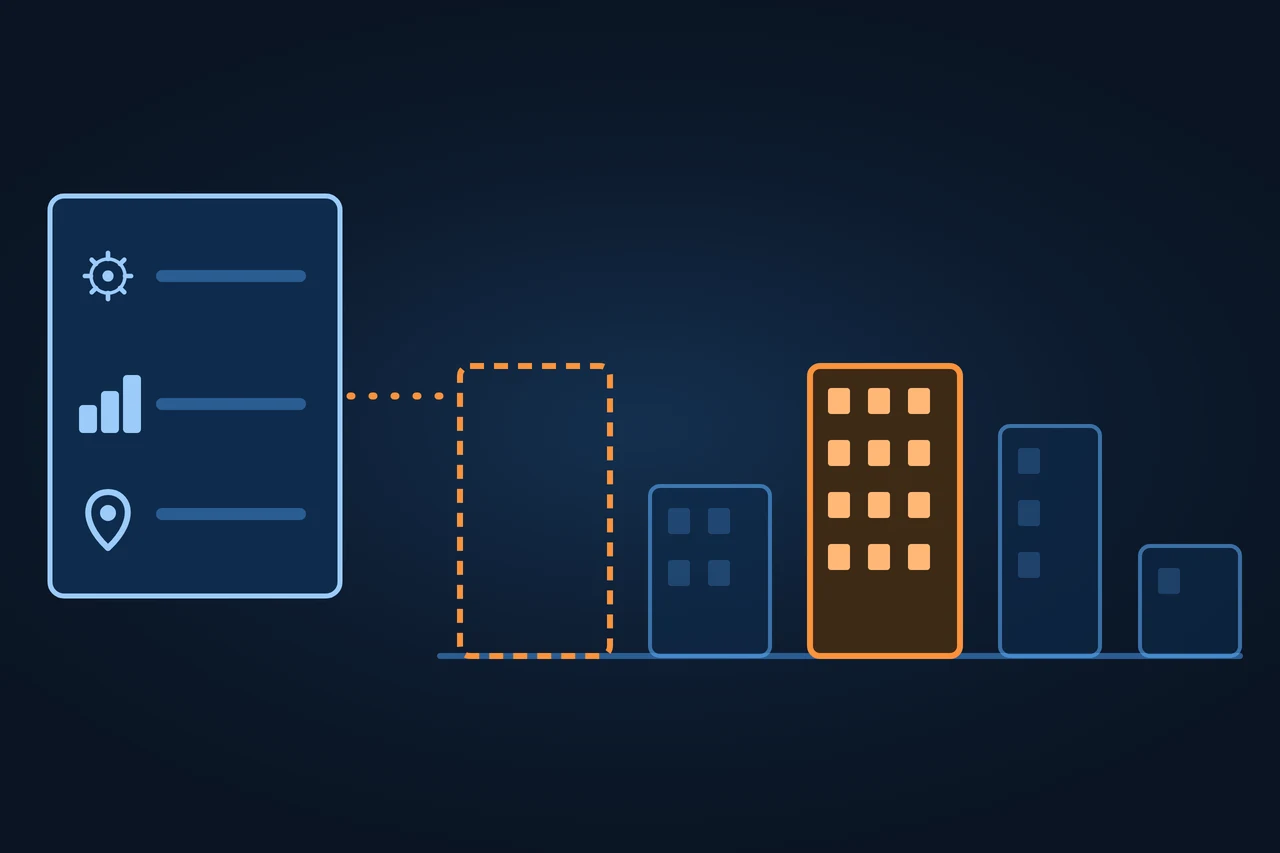
On the left, a card with three traits, each with its own sign: a gear, three steps and a location marker; an orange dotted path leads to the orange dashed outline of a company building; on the right, four buildings of different sizes, and only the one with exactly that outline is orange, on a dark blue ground.
On this page 11
  1. How it works
  2. Types and variants
  3. Examples
  4. Advantages and disadvantages
  5. How it differs from related concepts
  6. Criticism and limits
  7. Legal framework
  8. How to apply it, step by step
  9. Best practices
  10. Common mistakes
  11. How this entry was made
In brief

An ICP describes the type of company that gets the most value from an offer: its criteria, how to build one and how it differs from a buyer persona.

On the left, a card with three traits, each with its own sign: a gear, three steps and a location marker; an orange dotted path leads to the orange dashed outline of a company building; on the right, four buildings of different sizes, and only the one with exactly that outline is orange, on a dark blue ground.

How it works

Gartner Digital Markets defines the ICP as "the characteristics or attributes (e.g., industry, location) of a prospective company that is most likely to buy what you're selling and become a loyal and profitable customer". HubSpot's version: a detailed description of the organisation that would get the most value from what you sell "and actually has the budget and authority to buy it".

The starting point is your own data. Gartner's first step is to build a database from three kinds of information: historical customer and prospect figures from the CRM or ERP system (company size, industry, products bought, annual contract value), insights from the people in sales and customer success who deal with customers, and predictive analysis of that history. As a hands-on exercise, Gartner suggests listing your ten best customers and filling in a profile template for each.

The data is then sorted into criteria. Gartner groups them into six categories; HubSpot adds budget and buying authority explicitly.

CriterionWhat it coversExample given by the source
Firmographicssize, location, industry, organisational structurepublic companies headquartered in the US (Gartner)
Technographicsthe software, hardware and platforms a company usesmartech and mail tools (Gartner)
Psychographicsattitude to buying software, values, interestsinnovative vs traditional (Gartner)
Business situationyears in business, profitability, growth rate, acquisitions, regulatory changean organisation that has to respond to tighter data rules (Gartner)
Business and operating modeltransaction volumes, pricing modelproducts built to order (Gartner)
Resourceswhat the organisation has at its disposala midsize organisation with a few developers (Gartner)
Budget and authorityminimum revenue to afford the offer, who signs offa revenue threshold below which the package is out of reach (HubSpot)

Source: Gartner Digital Markets, "How to Define Your Ideal Customer Profile (ICP)", archived copy of 1 February 2025; HubSpot, 19 September 2025; accessed 23 November 2026.

Age, gender and family status are left out of the table on purpose. They describe a person, so they belong in a buyer persona.

Types and variants

A negative ICP describes the opposite: the accounts you cannot sell to. Gartner makes it a separate question in data collection ("What forms an account we can't sell to?") and gives an example: businesses that recently bought accounting technology are unlikely to buy more. HubSpot says a company that fails the basic criteria of budget, size, industry or technical requirements should be disqualified quickly, however promising the individual contact looks.

A tiered ICP ranks companies by how closely they match the profile. HubSpot builds a property with three tiers into its software: Tier 1 should be a great fit, while Tier 3 might be acceptable but is low priority. That ranking is what the target account lists in account-based marketing are built on.

The tier belongs to the company, not to the contact

The term also turns up applied to the ideal consumer in B2C. Both definitions used here limit it to organisations, so for private customers this entry points to the buyer persona and to segmentation.

Examples

A worked example with round numbers: a software company has 100 customers. Twenty of them are in the same industry and have between 50 and 200 employees, and together those twenty bring in 50% of revenue. On average each of them accounts for 2.5% of the total (50 ÷ 20). Each of the other 80 accounts for 0.625% (50 ÷ 80), a quarter as much. "Industry X, 50 to 200 employees" is then a first draft of an ICP, in the sense in which Gartner speaks of the enterprises that produce the largest share of your wallet.

Gartner also gives sample answers to its data-collection questions. For the main attributes of an ideal account it offers "U.S.-based marketing companies with more than 500 employees and over $20 million revenue". For a buying trigger it offers expanding overseas. Gartner uses them to illustrate the method, and it does not present them as a profile to adopt.

Advantages and disadvantages

HubSpot calls the ICP a pre-qualification filter: it decides which companies are worth sales effort before anyone talks to a particular person. According to Gartner, it also points sales and marketing at the same highest-value accounts.

Its weak point is that it leans on the past. A profile drawn from today's customers repeats the sales decisions that produced those customers and says nothing about segments the business has not yet tried. With only a handful of customers, the profile is still a hypothesis.

How it differs from related concepts

The difference from a buyer persona is one of level. Gartner puts it this way: "An ICP gives a broad picture of an enterprise your sales teams should target, while buyer personas zoom in on all individuals involved in the purchase process." HubSpot's shorter version is that personas tell you who you are speaking to, and ICPs tell you which companies are worth speaking to in the first place. A buyer persona is also semi-fictional, assembled from interviews and data, whereas an ICP records measurable traits of real organisations. Gartner sees the ICP as the basis for writing the personas.

ConceptWhat it describesHow it relates to the ICP
TAM, SAM and SOMmarket sizeGartner separates them: the addressable market covers every company that might buy, the ICP only those that produce the largest share
Account-based marketingworking a set of target accountsthe ICP decides which accounts go on the list
Lead scoringscoring contactsthe ICP supplies the fit part of the score; interest is measured separately
MQLa lead ready to hand to salescombines fit with the ICP and behaviour
Segmentationdividing a market into groupsthe ICP is the segment that gets priority
Product-market fitthe fit between product and marketreached for a segment; Balfour speaks of fit "for some market or audience"

Source: Gartner Digital Markets, archived copy of 1 February 2025; HubSpot; Brian Balfour, 11 December 2013; accessed 23 November 2026.

The Internet Computer only shares the letters. According to the network's own website, users hand ICP tokens to its governance system, the Network Nervous System, and receive voting neurons in return.

Criticism and limits

If the best customers are the best because the sales team handled them better, the profile mistakes an effect of selling for a trait of the company.

Psychographic attributes are harder to check than firmographic ones. Gartner describes them as the organisation's mindset, values and interests, which have to be inferred, whereas size and industry can be counted.

The profile shifts with the offer. A new product or a different price can change which customers bring in the most, and an ICP nobody revisits stops describing them.

How to apply it, step by step

  • Export your customers from the CRM with their revenue, tenure and the support effort they need.
  • Use those figures to separate your best customers from your worst.
  • Look for the firmographic and technographic traits the best share and the worst lack.
  • Write three to five criteria with concrete thresholds, and list the exclusion criteria separately.
  • Create a tier field in the CRM and give each account its tier.
  • Compare the profile at fixed intervals with closed deals and cancellations, and log every change with its date.

Best practices

  • Base each criterion on a CRM field, not on an impression.
  • Write exclusion criteria as precisely as inclusion criteria.
  • Use the same ICP in marketing and in sales.
  • Keep the company profile and the people who buy apart.
  • Revisit the profile when the offer or the price changes.

Common mistakes

  • Describing a person (age, job title, hobbies) and calling it an ICP.
  • Writing the profile without looking at customer data.
  • Treating the ICP as a measure of market size.
  • Keeping contacts who fail the basic criteria because the person seems keen.
  • Leaving the profile unchanged after launching a new product.

How this entry was made

This entry was written in November 2026 with the help of AI. The information comes from Gartner Digital Markets, HubSpot's blog and knowledge base, Brian Balfour's essay, EUR-Lex and the Internet Computer website, all accessed on 23 November 2026. Gartner's and HubSpot's definitions and examples are cited as theirs. The round-number example is ours. It was reviewed before publication and contains no customer data.

Manuel Riveiro Rodriguez CEO & Digital Strategist

A technical audit covers this and everything else in one pass.

Request an audit

Frequently asked

What does ICP mean in business?

ICP stands for ideal customer profile: a description of the company most likely to buy and to stay a profitable customer. It lists traits such as industry, size, technology in use and budget, taken from data on the best existing customers.

What is the difference between an ICP and a buyer persona?

An ICP describes companies; a buyer persona describes the people who buy inside them. In HubSpot's words, personas tell you who you are speaking to, and ICPs tell you which companies are worth speaking to in the first place.

How do you define an ideal customer profile?

Pull your best customers by revenue and tenure from the CRM, look for the traits they share and write those down as criteria with thresholds. Gartner suggests starting with a list of your ten best customers.

What is an example of an ICP?

Gartner's sample answer for the attributes of an ideal account is US-based marketing companies with more than 500 employees and over 20 million dollars in revenue. It is an illustration of the method, not a profile to copy.

What is a good ICP?

One whose criteria come from customer data, carry concrete thresholds and include exclusions. It should match the accounts that actually close and stay, which is why it is checked against deals and cancellations at fixed intervals.

Sources

  1. Gartner Digital Markets, "How to Define Your Ideal Customer Profile (ICP) for Precision Targeting", read in the web archive copy of 1 February 2025.
  2. HubSpot, "Ideal customer profiles and buyer personas: How are they different?", 19 September 2025.
  3. HubSpot Knowledge Base, "Set up account-based marketing in HubSpot".
  4. Brian Balfour, "The Never Ending Road To Product Market Fit", 11 December 2013.
  5. EUR-Lex, Regulation (EU) 2016/679 of the European Parliament and of the Council of 27 April 2016 (General Data Protection Regulation), Article 4 and recital 14.
  6. Internet Computer, project website (home page).