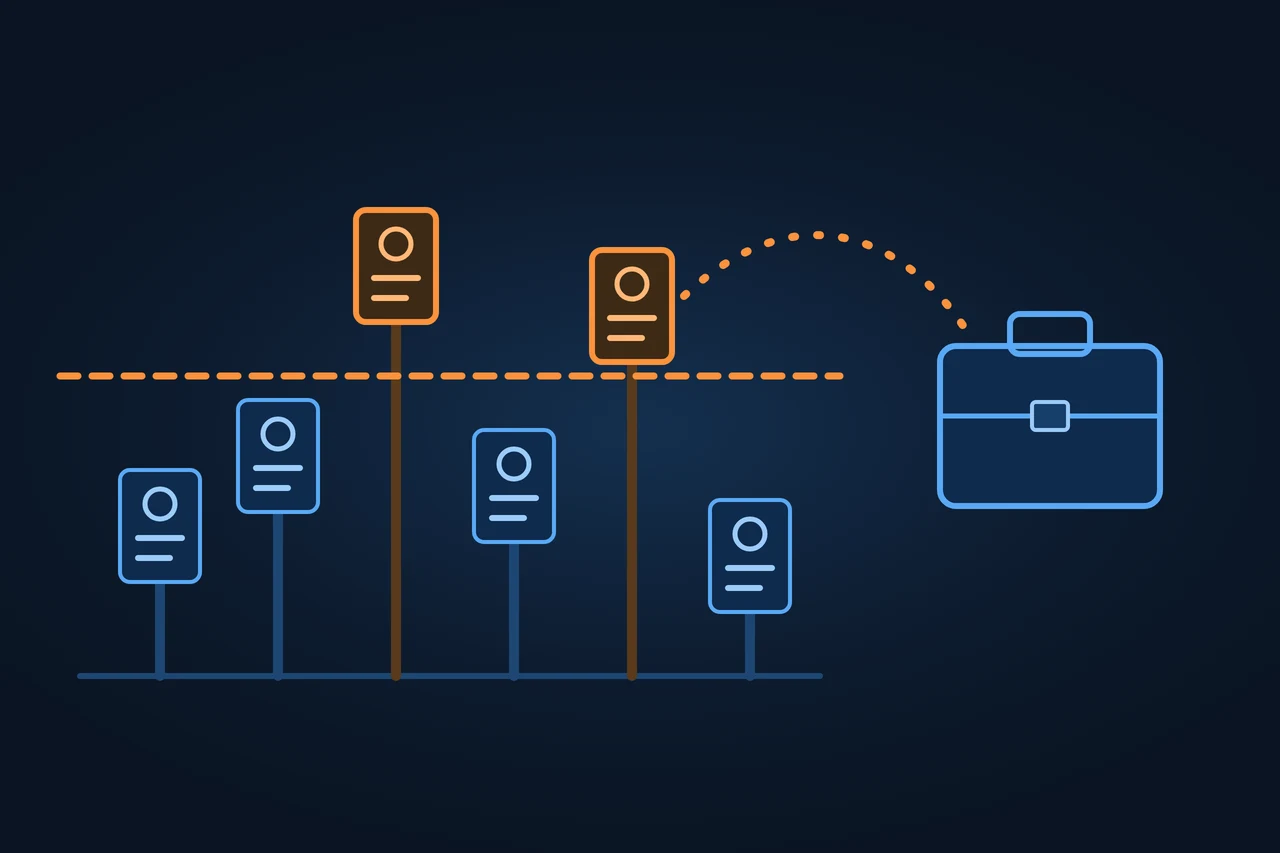
More stages follow the MQL, and they vary by model. In the classic SiriusDecisions Demand Waterfall, as Dave Kellogg explains it, the SAL comes before the SQL:
| Stage | Who decides | Criterion | Next step |
|---|
| Lead | Marketing | Has left contact details or interacted beyond a subscription | Nurturing and scoring |
| MQL | Marketing | Reaches the fit and behavior threshold | Handoff to sales |
| SAL (sales accepted lead) | Sales development (SDR) | Accepts or returns the lead within the agreed time | First conversation |
| SQL (sales qualified lead) | Sales rep | Has qualified the lead, for example with BANT | An opportunity is opened |
| Opportunity | Sales | A potential deal is attached | Proposal and close |
Source: Dave Kellogg (22.11.2019), Forrester (17.05.2018), HubSpot and Salesforce (26.01.2024), accessed 13.11.2026.
At the SAL stage, sales accepts or returns the MQL. Forrester lists what marketing and sales need to agree on: what an MQL and a SAL are, how fast sales responds, and the criteria for accepting or rejecting a lead. That agreement is the SLA described in the entry on lead generation, and the SAL stage makes it measurable: every MQL handed over ends up accepted or returned with a date.
Kellogg traces the order back to how the model was built, from marketing's point of view at a time when SDRs reported to sales: the SAL is acceptance by an SDR, the SQL is qualification by a sales rep. In his view, the Demand Unit Waterfall still uses the SQL but seems to have dropped the SAL.
HubSpot uses its own split: subscriber, lead, MQL, SQL, opportunity, customer, evangelist and other. It has no SAL stage, and the SQL keeps sub-stages in the Lead Status property.