
Skip to content

Glossary Dofollow

What Is Dofollow?

  • SEO Off-Page
Definition

Dofollow is the term the SEO industry uses for a link that doesn't carry rel="nofollow", the default state of any link; no such attribute actually exists in HTML.

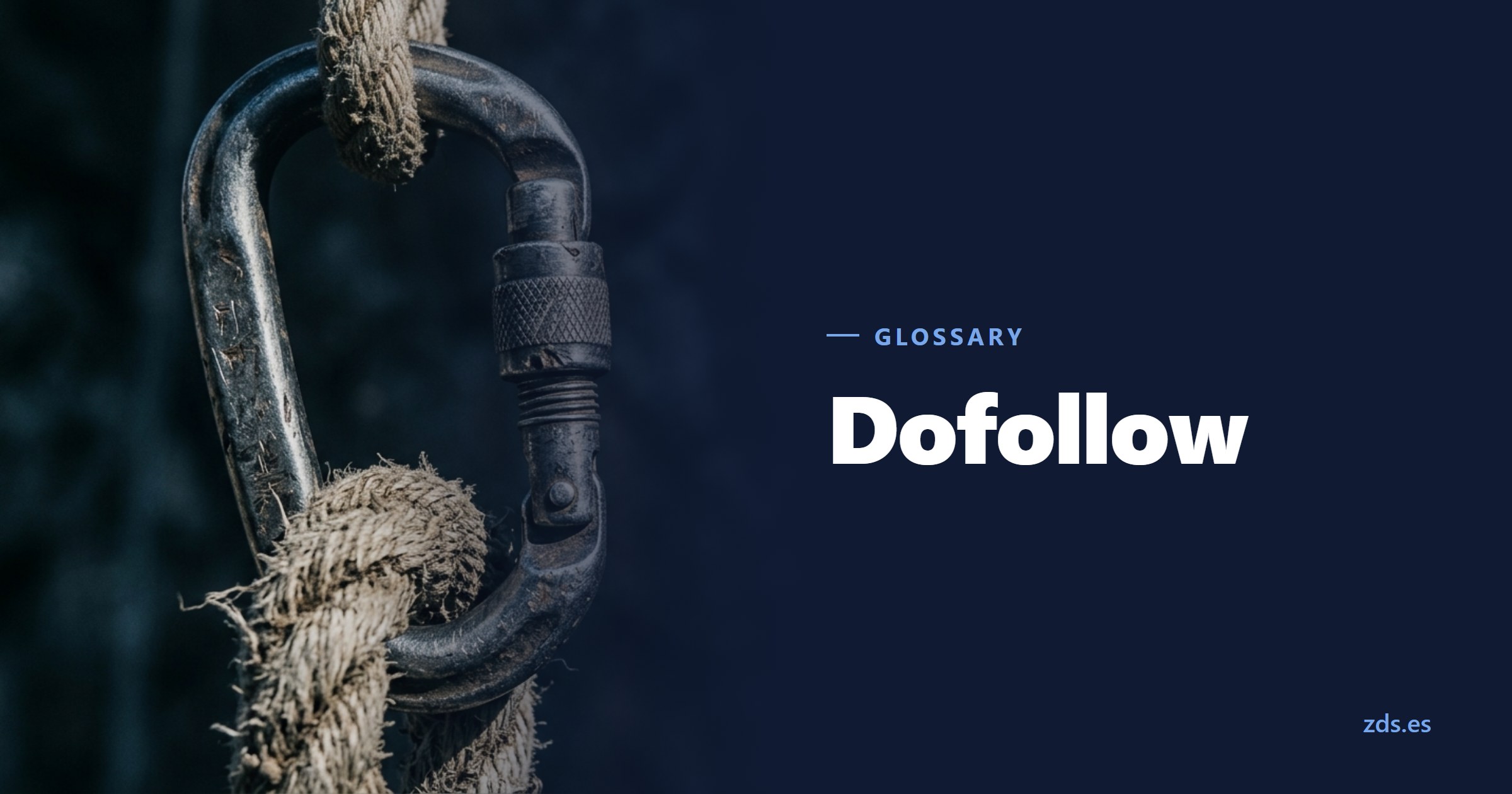
A closed steel carabiner through a loop of rope — beside the title Dofollow
The closed carabiner carries no mark: it is the default
On this page 5
  1. What does "dofollow" mean?
  2. How a dofollow link works
  3. Why it matters for link building
  4. Best practices
  5. Common mistakes
In brief

Where the word dofollow comes from, why typing rel="dofollow" in the code has no recognized effect, and what role this type of link actually plays in link building.

A closed steel carabiner through a loop of rope — beside the title Dofollow
The closed carabiner carries no mark: it is the default

What does "dofollow" mean?

Dofollow appears in no HTML specification and in no official Google documentation as an attribute. There's no rel value called "dofollow": type it into a link's code anyway, and browsers and Google simply ignore it, since it isn't a recognized value. The list of rel values that browsers and search engines actually act on includes nofollow, sponsored and ugc, and not once does it include the word dofollow.

The term was born by contrast. Once nofollow became a common attribute starting in 2005, the SEO industry needed a quick word for the opposite case, a link without that marking. "Dofollow" formed by analogy, not by decision of any technical body, and it stuck in the everyday vocabulary of anyone working with links. The fact that Google never adopted the term officially is itself a sign it was never part of the actual specification.

In practice, "dofollow" describes the standard behavior any crawler follows when it finds no instruction telling it otherwise: following the link normally. That's exactly why the phrase still lives mainly in the vocabulary of people who buy and sell links, rather than in Google's technical vocabulary.

Best practices

  • Check whether a link is dofollow by inspecting the HTML code: there's no visual sign on the page distinguishing it from a nofollow link.
  • Don't overpay for "guaranteed dofollow" links: it's the default behavior of any link, not a special upgrade someone is granting you.
  • Prioritize dofollow links from domains with real authority and relevance, not just because they're technically dofollow.
  • Keep a mixed link profile: a 100% dofollow profile tends to look unnatural to Google compared with a reasonable mix of nofollow, ugc and sponsored.
  • Audit your own outbound links: if everything defaults to dofollow, you may be passing ranking value to pages that don't deserve it.
  • Don't mistake a dofollow link for a quality link: the absence of nofollow says nothing about the destination site's trustworthiness or relevance.

Common mistakes

  • Believing there's a rel="dofollow" attribute you need to write into the code: it doesn't exist, and adding it has no effect recognized by Google or browsers.
  • Advertising or buying "100% dofollow links" as if it were a premium feature, when it's actually the standard behavior of any unmarked link.
  • Assuming every dofollow link carries the same value, without accounting for the real authority of the domain sending it.
  • Overlooking that many platforms, like forums or social networks, apply nofollow or ugc automatically, even when a link looks like an ordinary dofollow link.
Manuel Riveiro Rodriguez CEO & Digital Strategist

A technical audit covers this and everything else in one pass.

Request an audit

Frequently asked

Do I need to add dofollow as an attribute in the code?

No. There's no real attribute called dofollow. A link is dofollow when it carries none of rel="nofollow", rel="sponsored" or rel="ugc". It's the default state, not something you enable or declare anywhere, whether in the code or in a plugin setting.

How do I know if a link is dofollow?

By checking the link's HTML code. If the <a> tag includes none of the three rel attributes that actually exist (nofollow, sponsored, ugc), the link is dofollow. There's no visible sign on the page itself that marks it as such.

Are all links dofollow unless stated otherwise?

Yes, that's exactly the point. HTML requires no marking for a link to work normally; a rel attribute is only needed when you want to restrict how Google treats it. Dofollow is simply the absence of that restriction, not an extra property added on top.

Does a dofollow link guarantee my ranking will improve?

No. A dofollow link can pass ranking value, but how much depends on the real authority and relevance of the site sending it. A dofollow link from a low-quality site adds very little, even though it technically meets the condition.

Why do some sites advertise "dofollow links"?

Because they market it as a special advantage, when it's actually the default behavior of any unmarked link. It's a common way to sell as an extra something that costs nothing to enable, because there's nothing to enable beyond simply leaving an attribute out.