ECLASS is a standard for classifying products and services and describing them with fixed properties. Each class has an eight-digit code across four levels and a list of properties with their own identifiers, so a manufacturer and its customer read the same data the same way without translating or reinterpreting it. It is maintained by the ECLASS association (ECLASS e.V.), based in Cologne, Germany. It has nothing to do with eClass, the name of several e-learning platforms.
ECLASS classifies products with an 8-digit code and fixed properties. How the code works, a real class with IRDIs, compared with ETIM and UNSPSC.
Origin of the term
The standard began in Germany under the spelling eCl@ss. In September 2000 the website eclass.de carried the title "eCl@ss - Standard für Materialklassifikation und Warengruppen", a standard for classifying materials and commodity groups. In October 2020 the association introduced a new logo and has written its name ECLASS since then. Its own pages do not say what the name stands for.
ECLASS e.V. is a non-profit association registered in Cologne, and its office is run by IW Consult, a subsidiary of the German Economic Institute (IW). According to its articles of association, it was founded by resolution of the general assembly on December 14, 2000. The 2023 fact sheet and the membership page give a different date, November 14, 2000. The list of founders varies too: the 2018 white paper and the steering committee list of December 2000 agree on BASF, Bayer, Degussa, E.ON, Infraserv, SAP, Solvay, Volkswagen/Audi and Wacker, but the white paper adds Siemens and the 2000 list adds Henkel.
History and development
2000. In September release 3.0 is online at eclass.de, before the association exists. In December ECLASS e.V. is founded.
2011. Release 7.0 introduces a data model based on ISO 13584, a standardized XML format (OntoML) and the two variants Basic and Advanced.
2019. On April 5, at Hannover Messe, ETIM International and eCl@ss sign a memorandum of understanding that extends their collaboration, until then valid only for Germany, to the international level.
2020. On October 1 the association launches its new logo with the spelling ECLASS.
2022. In December release 13.0 adds extensions for the Asset Administration Shell, the digital twin of an industrial component.
2024. On November 29 release 15.0 adds 14 languages, for a total of 31.
2025. On November 28 release 16.0 is published, built on more than 155,000 change requests. It contains about 23,300 class definitions generated with ChatGPT and labeled as machine-generated.
2026. In June ECLASS presents a first AI-assisted mapping of ETIM groups to ECLASS classes, still in a test phase.
How it works
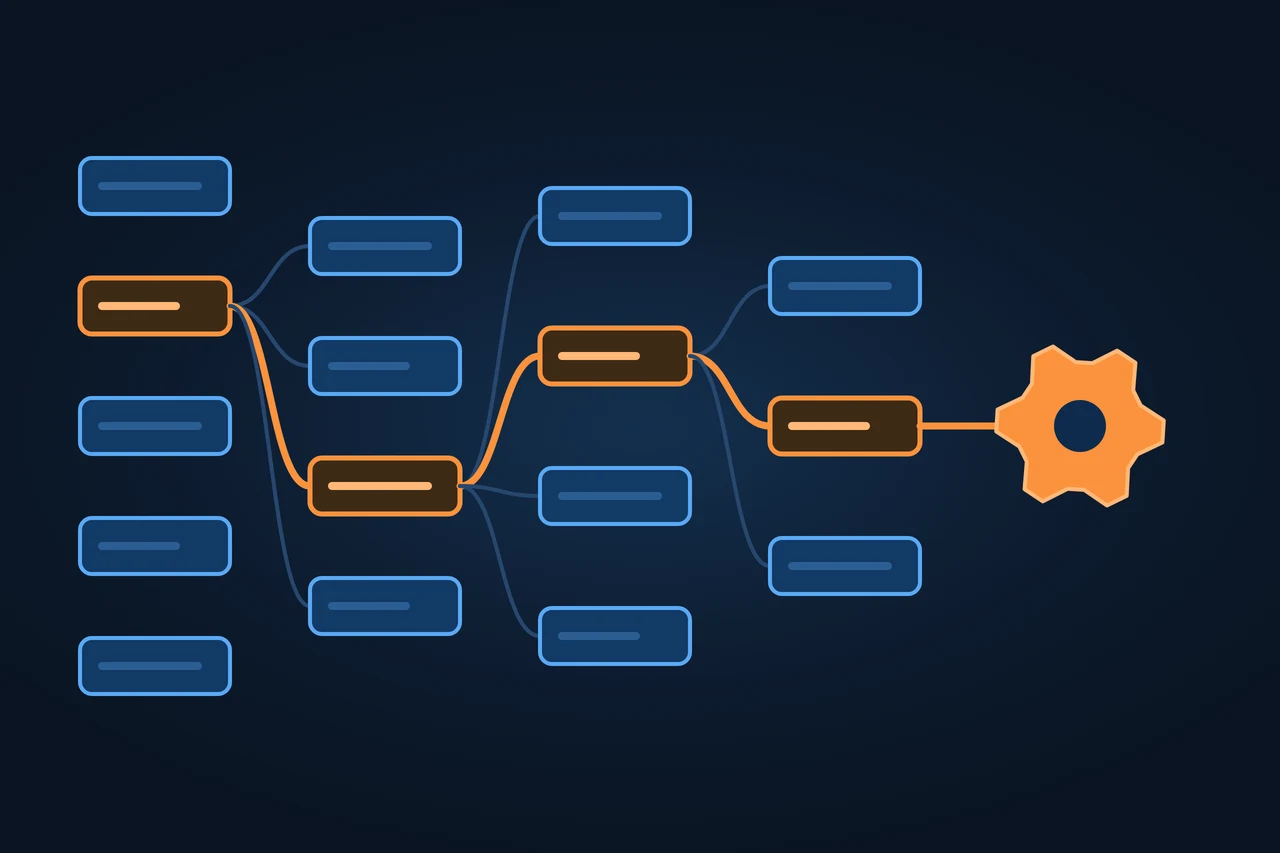
ECLASS sorts products into four levels: segment, main group, group and commodity class. The code has eight digits, two per level, and trailing zeros show the level: 24-00-00-00 is a whole segment, 24-24-01-01 a specific class. According to ECLASS, the standard has about 48,000 product classes and more than 23,000 properties.
What sets ECLASS apart from a plain list of categories is the properties. Each class carries a fixed set, such as length, material or voltage, each with a data type, a unit and, where relevant, a list of allowed values. Classes, properties, values and units all have an IRDI, an internationally unique identifier under ISO/IEC 11179-6, ISO 29002 and ISO 6532, in the form 0173-1#02-ABG899#002. The IRDI does not depend on language, so a system in Chicago and one in Stuttgart recognize the same property even if one calls it length and the other Länge.
The ECLASS guidelines require compliance with ISO 13584-42 and IEC 61360-1, the standards that govern how properties and class hierarchies are described. ECLASS follows those standards but is not part of them.
The standard is delivered as CSV, as XML based on ISO 13584-32 and as JSON, and a web service can pull the parts a company needs straight into its PIM, ERP or online store. Since release 15.0 there is content in 31 languages, 29 of them fully translated. The public search on the website works in German, English, French and Chinese.
In day-to-day use, the ECLASS class travels with the item inside a catalog file such as BMEcat, the exchange format, or is stored in the PIM system as one more attribute of each item.
Two digits per level, and an IRDI that does not depend on language
ECLASS publishes a new release every year. Using the standard requires a license: a single license covers one release, a Concordance license covers every release during its term, and members of the association have it at no extra cost. The fee depends on company size.
Examples
A real class from the public search, ECLASS Basic 16.0, accessed on November 7, 2026:
Class 24240101 has the IRDI 0173-1#01-AFQ910#012 and is defined as a wooden writing instrument with a graphite lead of different hardnesses and sizes. In the Basic variant it has 62 properties. Five of them:
Property
IRDI
Data type
Designation of hardness
0173-1#02-AAP919#003
Text
Rubber present
0173-1#02-BAG466#010
Yes/no
Shaft lacquered
0173-1#02-BAG468#010
Yes/no
Design of shank form
0173-1#02-BAG108#004
Translatable text
Length
0173-1#02-BAF559#009
Number with unit
Source: ECLASS content search, release 16.0.
An office pencil with HB hardness, an eraser and a lacquered shaft is described with the same identifiers in every language. The same class also carries the World Customs Organization's HS code and the customs tariff number as properties, so the customs data travels with the item without ECLASS replacing it.
In machinery, release 16.0 added for example class 27-38-03-01 "Parallel gripper (electric)", and from the harmonization with ETIM class 27-21-07-17 "Immersion thermostat".
Advantages and disadvantages
Use case
Advantage
Disadvantage
Verdict
Manufacturer selling to industrial customers
Data flows into the customers' catalogs and procurement portals without rework
Every class needs its properties filled; the code alone is not enough
Fits when customers ask for ECLASS
Electrical wholesaler
Suppliers with ECLASS data can be mapped
The industry standard there is ETIM
ETIM first, ECLASS only for industrial customers who require it
B2C online store
A stable way to organize the catalog
Shoppers do not see the code, and Google does not ask for it
Little benefit for the effort
Purchasing and e-procurement
Offers from different suppliers can be compared on the same properties
Suppliers have to deliver ECLASS data
Pays off with many suppliers and technical items
Source: own assessment; according to ECLASS, implementation effort depends on master data quality, the number of items and the number of languages.
How it differs from related concepts
Standard
Maintained by
Structure
Purpose
ECLASS
ECLASS e.V., Cologne
4 levels, 8-digit code, IRDI for every element
Classes and properties for products in all industries
An XML exchange format with no classification of its own
Exchanging catalogs; carries the ECLASS or ETIM class
Customs tariff (HS)
World Customs Organization
Tariff number
Customs and duties, not product description
Source: each body's website (accessed 07.11.2026). The comparison of ETIM and BMEcat is in the ETIM entry.
Tools
According to ECLASS, this is how to find the right number:
Search the content search on eclass.eu for the product term in the singular (for example pencil), and try a synonym if nothing comes up.
Or browse the tree: segment, main group, group, commodity class.
Pick the release: the search covers releases 5.1.4 to 16.0.
If no class fits, submit a change request through the Content Development Platform. Anyone can do this after registering, and accepted requests go into the next release.
Before using the code in your own data, check the license required by the terms of use.
Software that, according to its makers, imports or uses ECLASS, in alphabetical order:
AASX Package Explorer: a free editor for Asset Administration Shells, developed by the ECLASS members Festo, Phoenix Contact and SICK, which imports ECLASS properties.
ECLASS web service: delivers classes and properties to a PIM, ERP or store, billed per IRDI retrieved, free for full members and Concordance licensees.
prodexa PIM: documents the import of ECLASS data in five steps.
Stibo Systems STEP: imports the Basic variant; Advanced needs a separate commercial license.
Criticism and limits
The first cost is the license: the search is public, but applying the standard in your own data requires a license or membership. Then there is the work of every release change. ECLASS supplies update files that automate part of it, but its own glossary warns that when a class is split, a person usually has to decide which items go into which new class.
Release 16.0 contains about 23,300 AI-generated definitions. ECLASS labels them as machine-generated, whereas the 250 in release 15.0 were reviewed by experts. Anyone reusing definitions as copy on product pages should keep the two kinds apart.
ECLASS also competes with industry standards: ETIM in electrical products, GS1 in consumer goods. Moving data from one standard to another loses information where the classes do not match, and the AI mapping between ETIM and ECLASS is still being tested.
How to apply it, step by step
Ask your customers and procurement portals which standard and which release they require.
Fix one ECLASS release for the whole catalog and state it in every export.
Classify a pilot category first and check that every item lands in a commodity class, not a higher level.
Fill in the required properties of each class, with units.
Export a test BMEcat file and have the customer load it.
Plan the move to the next release before it comes out, using the ECLASS update files.
Best practices
Store the class code and IRDI in the PIM, not in a separate spreadsheet.
Always give the ECLASS release together with the code.
If you work with both ETIM and ECLASS, keep the mapping in a single place.
Request missing classes through a change request instead of using a similar class.
Common mistakes
Assigning only the class code and leaving the properties empty.
Sending data without stating the ECLASS release.
Classifying at a higher level because the search for the commodity class was given up.
Maintaining ETIM and ECLASS separately with no mapping, until the data contradicts itself.
Copying AI-generated definitions unreviewed into sales copy.
How this entry was made
This entry was written in November 2026 with AI assistance. It started from an analysis of the top ten search results in Germany, Spain and the US, in order to add what they leave out: a real class with its IRDIs, the comparison with ETIM, UNSPSC, GS1 GPC and BMEcat, and the steps for finding a code. The dates come from the ECLASS articles of association, its own pages and archived versions of its website in the Internet Archive. It was reviewed before publication and contains no client data.
Manuel Riveiro RodriguezCEO & Digital Strategist
A technical audit covers this and everything else in one pass.
It is the eight-digit number of a class, two digits for each of the four levels, for example 24-24-01-01 for an office pencil. It is always given with a release, because classes change from one release to the next, and goes together with the class IRDI.
What does ECLASS stand for?
The association does not spell out the name on its website. The standard was written eCl@ss until 2020 and has been ECLASS since the new logo of October 2020. It is the classification standard of ECLASS e.V. in Cologne, and it is unrelated to the eClass e-learning platforms.
Is ECLASS free?
Searching on eclass.eu is public, and the Asset variant is free. Using the Basic and Advanced variants in your own data requires a license or membership of the association, with fees based on company size.
Should I use ECLASS or ETIM?
It depends on the industry and on what customers ask for. ETIM is the standard for electrical and installation products; ECLASS covers every industry, and the association names users such as Wien Energie, B. Braun Melsungen, Fraport and the procurement platform Mercateo. The two organizations have worked together internationally since 2019, and release 16.0 includes classes harmonized with ETIM.