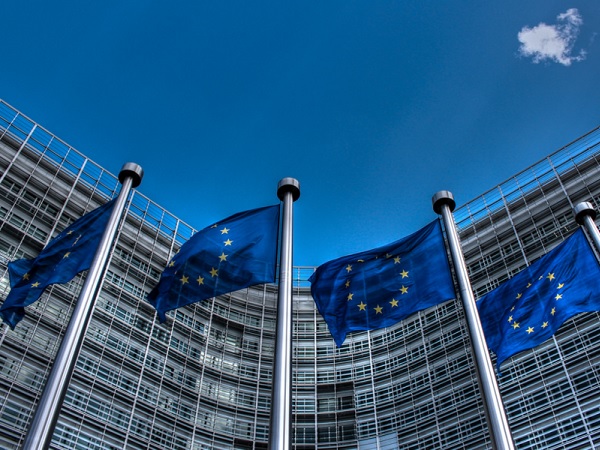
SEO criteria are constantly changing, which every marketer expects. Nevertheless, news like the new European Union (EU) directive, stating that Google is not a search engine, has caught many off guard.
We admit it: after hearing this news, we had to confirm it wasn't an April Fools' Day joke. But it's true: a recently approved text in Brussels would not consider the Californian giant a search engine, as reported by Search Engine Journal, citing the EDRi portal.
Reaching this resolution – which would also affect other engines like Bing, Yahoo!, or DuckDuckGo – required two years of negotiations between the European Parliament and the Council of Europe, as well as a lengthy legislative procedure. This discussion, though years old, remains relevant in 2026, especially with the rise of generative AI and the evolution of search engines into “answer engines” or “knowledge engines.”
What Is a Search Engine (for the EU)?
One of the definitions included in the forthcoming Directive on Security of Network and Information Systems (NIS), describes a search engine as follows:
“[It is a] digital service that, in principle, allows users to perform searches across all websites or a geographical area thereof, [as well as] websites in a specific language based on a query on any topic in the form of a keyword, phrase or other input, and that returns links where information related to the requested content can be found.”
This definition would exclude all known search engines from this category, as to comply, they would need to be capable of searching all websites. Not even Google does this; for example, it does not locate dark web pages (i.e., everything that does not appear on the conventional internet or, in other words, on the surface web).
The same applies to all pages containing a robots.txt file, which instructs the Google crawler (Google Bot) that the page should not appear in its search engine results page (SERP). Furthermore, this procedure is essential in many SEO strategies, as it prevents the indexing of content that the company managing the site might not want to display initially, or that could increase the bounce rate (e.g., company contact details).
In our experience at ZDS Digital, the correct use of the robots.txt file and noindex meta tags is crucial. A common mistake is to block pages via robots.txt that are then attempted to be deindexed with noindex, creating a contradiction that Google cannot resolve. robots.txt only prevents crawling, not indexing if already linked from elsewhere. For effective deindexing, noindex is the solution, ensuring the page is crawlable so Google can see the directive.
The Impact of AI on the Definition of “Search Engine”
The 2026 landscape, with the advent of generative Artificial Intelligence in search (such as ChatGPT, Perplexity AI, and AI features in Google Search), complicates this definition. These systems don't just “return links”; they synthesise information, answer questions directly, and even generate original content. This blurs the line between a traditional “search engine” and a “knowledge assistant.” The EU may need to revisit this definition to encompass these new realities, especially regarding source attribution and the transparency of AI-generated information.
What Consequences Could This Directive Have?
This definition could create a potential legal loophole when regulating access to content. If search engines demonstrate that their activity does not 100% conform to EU requirements, future regulations and restrictions from Brussels concerning search engines could be rendered ineffective.
Should a legal dispute arise, this scenario would not be new. Evidence includes the battle between Google Books and the European Union over book copyrights in 2009, or the closure of Google News Spain in December 2014. On that occasion, Google's drastic decision was prompted by the Intellectual Property Law (LPI), which obliged media outlets to charge a fee to internet aggregators, a toll that Mountain View decided not to pay.
In the case of the new directive, the nuance “in principle” – included in the definition of search services – would be the only thing leaving the door open to continue considering Google, Bing, Yahoo, and DuckDuckGo as such.
Current Regulatory Context (2026): DMA and DSA
While the NIS directive is a starting point, the current regulatory landscape in the EU is dominated by the Digital Markets Act (DMA) and the Digital Services Act (DSA), both fully in force by 2026. These laws have a much more direct impact on how “gatekeepers” (like Google) operate their services, including search. The DMA, for example, imposes obligations on interoperability, fairness in search results (preventing self-preferencing of Google's services), and access to data for competitors. Its practical implications are enormous and aim to level the digital playing field, directly affecting how users interact with search results and how businesses must optimise their presence.
At ZDS Digital, we observe that these regulations force Google to be more transparent and offer more options to users and publishers. This can translate into new opportunities for smaller websites that were previously overshadowed by Google's own services, or the need to adapt SEO strategies for a more diversified search ecosystem.
Optimisation for Visibility in a Changing Environment
Regardless of how the EU legally defines Google, appearing prominently in search results remains vital for any business. The rules of the SEO game are constantly evolving, and what was a “trend” in 2018, like mobile optimisation, is now a non-negotiable standard. For 2026, the focus is on user experience, topical authority, and adaptability to conversational search.
E-E-A-T and Helpful Content: Pillars of Modern SEO
The concepts of Experience, Expertise, Authoritativeness, and Trustworthiness (E-E-A-T) are more important than ever. Google, through its updates like the Helpful Content Update, rewards content created by people for people, demonstrating deep knowledge and real experience. Content quality, originality, and the credibility of the author or organisation are key factors. At ZDS Digital, we advise our clients to focus on:
- Creating original and valuable content: Avoiding duplicate or automatically generated content without human oversight.
- Demonstrating expertise: Including author biographies, credentials, case studies, and testimonials.
- Building authority: Obtaining quality backlinks from relevant sites and establishing a strong brand presence.
- Fostering trust: Transparency in information, clear privacy policies, and excellent customer service.
Core Web Vitals and User Experience
Core Web Vitals (CWV) are Google metrics that evaluate a page's user experience. By 2026, the INP (Interaction to Next Paint) metric has replaced FID (First Input Delay) as the primary interactivity metric. A good INP indicates that the page responds quickly to user interactions, which is crucial for retention and conversion. Other CWVs include LCP (Largest Contentful Paint) and CLS (Cumulative Layout Shift).
Quick Wins to Improve CWVs:
- Optimise images (compression, modern formats like WebP).
- Minify CSS and JavaScript.
- Eliminate render-blocking JavaScript.
- Use a CDN (Content Delivery Network).
- Ensure fast and reliable hosting.
The Era of GA4 and Data Analytics
With the complete transition to Google Analytics 4 (GA4), how we measure and analyse website performance has dramatically changed. GA4 focuses on events and users, offering a more holistic view of the customer journey across different platforms. Mastering GA4 is fundamental for any modern SEO strategy to understand user behaviour and optimise accordingly.
Tips for GA4:
- Configure custom events relevant to your business.
- Leverage exploration reports for in-depth analysis.
- Integrate GA4 with Google Search Console for a complete overview of search performance.
- Pay attention to data privacy, a pillar of GA4 and current regulations.
Privacy and Consent
The “privacy-first” approach is an unavoidable reality. Regulations like GDPR and CCPA, along with the gradual phasing out of third-party cookies, compel businesses to be more transparent and obtain explicit user consent. This affects data collection, personalisation, and digital marketing strategies. Good SEO not only seeks to rank but to do so ethically and respectfully of user privacy.
How to Improve Your Website's Indexing?
Do you have questions about how search engines work after reading this article? Does your company's or business's website contain pages you'd prefer not to show in search results? Do you know if your site is being indexed correctly by Google?
Correct indexing is the first step to visibility. If Google cannot find and understand your pages, you won't appear in the results. Here are some key points and common errors:
- XML Sitemaps: Ensure you have an updated XML sitemap and submit it to Google Search Console. This helps Google discover all your important pages.
- Internal Link Structure: A good internal linking structure ensures that “link juice” flows correctly and that Google can crawl all relevant pages. Avoid orphan pages.
- Crawling and Performance: Use the “URL Inspection” tool in Google Search Console to check the indexing status of specific pages and troubleshoot crawling issues.
- Quality Content: Google indexes content it deems valuable. If your content is poor, duplicated, or does not meet E-E-A-T standards, it is less likely to be indexed well or rank.
robots.txtandnoindexErrors: As mentioned, a misconfiguredrobots.txtcan block the crawling of important pages. Ensure thatnoindexdirectives are not blocked byrobots.txt, as Google needs to crawl the page to see thenoindexdirective.- Site Speed: A slow site can hinder crawling and indexing, especially for large sites.
To resolve any of these questions, contact us or call us without obligation on 93 532 93 78. We will study your website's situation and needs and advise you on how to improve its visibility through on-page SEO and link building. We look forward to hearing from you!