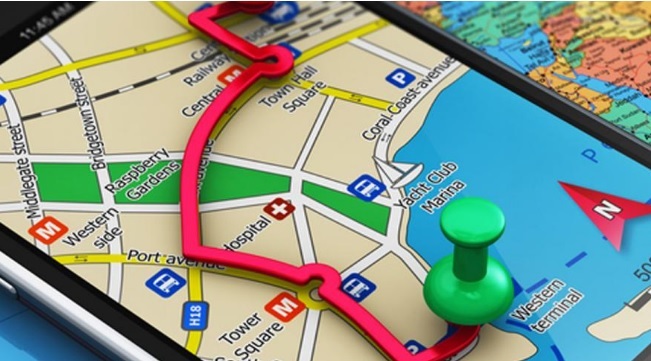
The market for apps continues to grow. Google Maps is the second application to reach 1 billion downloads, after Gmail.
This surge contrasts with the maintenance dynamics it has had to date. Google has relied on spontaneous user contributions to keep Google Maps information updated and accurate. Google wants to continue with this strategy.
To facilitate this, Google has just announced new utilities that will make it easier to add places to Google Maps, as well as post comments or suggest modifications. Mountain View states that these functionalities for adding or editing information can be used in all countries where the Google Maps app is already available, for both iOS and Android devices.
More participation from Google Maps users
Until now, Google Maps offered users the option to provide data about a business: name, postal address, telephone number, or specific characteristics (for example, in the case of restaurants, the type of cuisine they offer or if they also have a terrace).
Once the improvements are implemented, internet users will be able to suggest additional information about businesses if they believe it could be useful (returning to the restaurant example: the approximate menu price, opening hours, if they include special dishes for coeliacs or people with food allergies, etc.).
This system will allow recommendations to be published quickly and will be of great help to the Google team responsible for reviewing maps.
Thus, if a user searches for a place for which someone has suggested new information, a notification will appear on the destination page indicating what data has been added. Clicking on that link will open a box where the user can verify if the suggested data is correct. Otherwise, the user can indicate that they are unsure of its veracity.
Once Google Maps has a certain number of positive validations of suggestions from users, it will permanently incorporate the new information into the app's directory.
Improve your business's local SEO through Google Maps?
This functionality expands the range of options in Google Maps, an application which, along with other options — Google search, Foursquare, Yelp, or TripAdvisor — focuses on local SEO searches.
We are talking about a growing branch of search engine optimisation: according to a 2014 study by Google in collaboration with Ipsos MediaCT, local information about products or restaurants is already the most searched information from mobile devices. Therefore, paying attention to this aspect is important.
If you need guidance to plan, launch, or improve your company's local SEO strategy, contact us or call us without obligation on 93 532 93 78. At ZDS Digital, your digital marketing agency in Barcelona, we have helped multinationals and SMEs successfully improve their results in local searches. Would you like to add your business to the list and improve your visibility in your desired geographical area?
The evolution of Google Maps and its impact on Local SEO (2024-2026)
What was an emerging trend in 2014 is now, in 2024, a consolidated and constantly evolving reality. Google Maps is not just a navigation application; it has transformed into a powerful local search engine and an essential discovery platform for millions of users. Users' ability to contribute information has grown exponentially, and Google has refined its algorithms to give more weight to the quality and veracity of these contributions.
According to 2023 Statista data, over 70% of mobile searches have local intent, and 28% of these searches result in a purchase or visit to a business in less than 24 hours. This underscores the importance of appearing prominently in Google Maps and maintaining an optimised and updated business listing.
At ZDS Digital, we have observed how companies that invest in optimising their Google Business Profile (formerly Google My Business) and encourage user interaction on Maps achieve a significant increase in store visits and phone calls. For example, in a recent case with a hospitality sector client in Barcelona, optimising their Google Business Profile, including active review management and adding detailed attributes, resulted in a 45% increase in direction requests and a 30% increase in direct calls over a six-month period.
New functionalities and how to leverage them for your business
The improvements announced by Google to facilitate the addition and editing of information have evolved into a more robust ecosystem. Today, users can not only suggest basic data but also:
- Add high-quality photos and videos: These visual contributions are crucial. A 2023 Google study indicated that profiles with customer photos receive 42% more direction requests and 35% more clicks to their website.
- Answer frequently asked questions: The "Questions and Answers" section is a treasure trove for businesses. Proactively answering user queries improves the experience and positions the business as an authority.
- Report incorrect information or spam: This functionality is vital for maintaining data integrity. As a company, it's important to monitor and report any attempts at disparagement or false information about your business or competitors.
- Add detailed attributes: Beyond the basics, Google allows specifying if a business is wheelchair accessible, if it offers free Wi-Fi, if it's pet-friendly, if it has vegan options, or even if it's a "women-owned business." These attributes are key filters for users in 2024-2026.
Community data verification remains a pillar. Google has introduced more sophisticated algorithms, supported by artificial intelligence, to evaluate the credibility of contributions. This, combined with validation from "Local Guides" (users with a high level of contribution and trust), ensures that the information displayed is as accurate as possible.
The role of E-E-A-T and Helpful Content in Google Maps
The concepts of E-E-A-T (Experience, Expertise, Authoritativeness, and Trustworthiness) and Google's Helpful Content Update, fundamental for organic SEO, also resonate in local SEO and Google Maps. The information users provide and how businesses manage their presence on Maps directly influence these factors:
- Experience: User reviews and comments are the clearest manifestation of experience. A business with many positive and detailed reviews demonstrates that it offers a good experience.
- Expertise and Authoritativeness: Answering questions with accurate and useful information, or adding attributes that demonstrate deep industry knowledge (e.g., a restaurant detailing its organic produce suppliers), contributes to the perception of expertise and authoritativeness.
- Trustworthiness: Consistency of information (NAP: Name, Address, Phone) across all online platforms, professional responses to reviews (both positive and negative), and transparency in listing data build trustworthiness.
The Helpful Content Update, launched in 2022 and with continuous updates, aims to prioritise content that is genuinely useful to the user. In the context of Google Maps, this translates into business profiles that offer complete, accurate, and relevant information that truly helps the user make an informed decision. Profiles "filled" with generic or outdated information will be less visible.
Practical tips for optimising your presence on Google Maps (2024-2026)
To ensure your business not only appears but stands out on Google Maps, here is a list of quick wins and advanced strategies, based on our experience at ZDS Digital:
1. Claim and fully optimise your Google Business Profile
- Complete and accurate information: Ensure your business name, address, phone number (NAP), and opening hours are identical across all platforms (website, social media, directories). Inconsistency is a common error that confuses Google.
- Relevant categories: Choose the most specific and relevant categories for your business. Google allows multiple categories; use all that apply.
- Compelling description: Write a description that not only informs but also sells. Include relevant keywords from your sector.
- Detailed attributes: Complete all possible attributes. Do you offer home delivery? Do you have a terrace? Is it wheelchair accessible? These details are actively sought by users.
- Quality photos and videos: Upload professional photos of your premises, products, team, and atmosphere. Update them regularly. User photos are also important, but yours make the first impression.
2. Active management of reviews and questions
- Encourage reviews: Encourage your satisfied customers to leave reviews. You can use QR codes, cards, or email reminders.
- Respond to all reviews: Thank positive reviews and respond to negative ones professionally and constructively. Show that you care about the customer experience.
- Monitor and answer questions: The "Questions and Answers" section is a golden opportunity. Respond quickly to user queries and consider adding your own frequently asked questions with their answers.
3. Posts and offers on Google Business Profile
Use the "Posts" feature to share news, offers, events, or important updates. It's like a mini-blog within your Google profile and helps keep your listing dynamic and relevant. At ZDS Digital, we have seen that businesses that post regularly have 15% more interactions.
4. Links to your website and bookings
Ensure your website link is correct and that, if you have an online booking system, it is well integrated. Ease of Conversion Rate is key.
5. Monitoring and analysis with Google Analytics 4
With the full transition to Google Analytics 4 (GA4), it is crucial to correctly configure the tracking of interactions coming from Google Maps. You can see how many users arrive at your website from your Google Business Profile, what actions they take (calls, direction requests), and how they contribute to your business objectives. This allows you to measure the ROI of your local SEO efforts.
6. Adaptation to the context of AI Search and Privacy-First
The emergence of AI-powered conversational search (like ChatGPT or Perplexity AI) means users can get direct answers without visiting a website. For local SEO, this implies that the information in your Google Business Profile must be so complete and accurate that it can serve as a direct answer to an AI query. In a "privacy-first" world, transparency and trust are even more important. Ensure your contact information and privacy policies are clear.
7. Core Web Vitals and user experience (INP)
Although not directly on Google Maps, the user experience on your website (linked from Maps) is crucial. With the introduction of INP (Interaction to Next Paint) as a core Core Web Vitals metric in 2024, ensure your website loads quickly and is interactive. A poor experience on your website can negate visibility efforts on Maps.
Recommended tools for Google Maps and Local SEO management (2024-2026)
To effectively manage your local presence, we recommend some tools that we use at ZDS Digital:
- Google Business Profile Manager: Google's official and free tool for managing your listing. Essential.
- Surfer Local (formerly Local Falcon): To monitor your local Ranking in different geographical points and see how you position against the competition.
- BrightLocal / Semrush Local: All-in-one platforms for citation management, reviews, and local SEO audits.
- GatherUp / Birdeye: For online reputation management and review request automation.
- Google Search Console and Google Analytics 4: To understand traffic and user behaviour that comes to your website from your Google profile.
The evolution of Google Maps and the local search ecosystem offers unprecedented opportunities for businesses. Staying up-to-date with the latest functionalities and best practices is fundamental to ensuring optimal visibility and attracting the right clientele. At ZDS Digital, we are ready to help you navigate this dynamic landscape and turn your local presence into a growth engine for your company.