Origin of the term
The code was developed in 1998 by UNDP and the business information company Dun & Bradstreet, according to the code's former official website. Colombia's public procurement agency calls it the Clasificador de Bienes y Servicios.
Glossary UNSPSC
UNSPSC (United Nations Standard Products and Services Code) is an open, global classification of products and services. Each UNSPSC code has eight digits across four levels. The code is owned by the United Nations Development Programme (UNDP) and is used in procurement, spend analysis and electronic catalogs.
UNSPSC is the UN's 8-digit code for products and services. Code structure, how to look up a code, the current version and how it differs from NAICS.
The code was developed in 1998 by UNDP and the business information company Dun & Bradstreet, according to the code's former official website. Colombia's public procurement agency calls it the Clasificador de Bienes y Servicios.
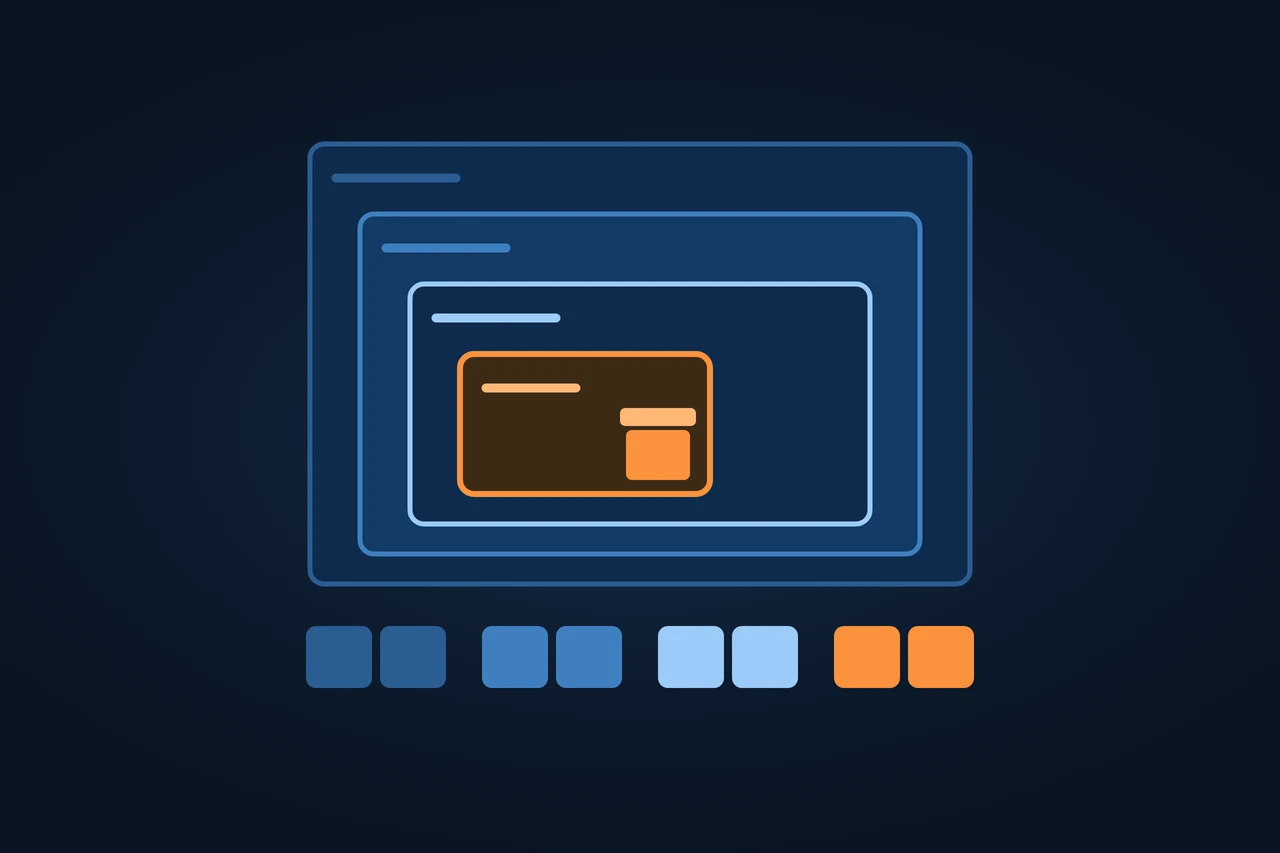
A UNSPSC code moves from general to specific in steps of two digits. The first two digits are the segment, the next two the family, then the class and finally the commodity. Higher levels are padded with zeros: 27000000 is a whole segment, 27110000 a family, 27112700 a class and 27112703 a single commodity.
27112703UNDP describes a five-level classification. The fifth level, the business function, adds two digits that say what the organization uses the purchase for. According to Wikipedia it is optional. The California Department of General Services describes this as a 10-digit code (SSFFKKCCBB) and notes that California does not use the fifth level.
The file UNDP publishes (version UNv26.0801, accessed 8 November 2026) contains 58 segments, 559 families, 7,998 classes and 149,906 commodities. Of the 20 segments numbered 70 and above, 18 are services, from industrial cleaning to healthcare and education. Every entry has an English title, and just over 91% of the commodities also carry a definition.
UNSPSC tells you what kind of thing is being bought, not which exact product. One manufacturer's power drill and a competitor's share the code 27112703. The individual item is identified by its GTIN, and its technical features are described by classifications such as ECLASS or ETIM.
New versions change codes: they add commodities, move classes and delete entries. SAP Ariba's documentation says supplier catalogs must use the buyer's UNSPSC version. The next sentence says this is not required, because SAP Ariba translates codes between versions.
There are three variants:
The official code set is published in English. Translations into Spanish, German and other languages were contributed by members of the user community, according to GS1 US in 2024. UNDP currently links only the English file.
One code, level by level, as it appears in the UNDP file:
| Level | Digits | Code | Title in the file |
|---|---|---|---|
| Segment | 2 | 27000000 | Tools and General Machinery |
| Family | 4 | 27110000 | Hand tools |
| Class | 6 | 27112700 | Power tools |
| Commodity | 8 | 27112703 | Power drills |
Source: UNDP, UNSPSC code file UNv26.0801, accessed 8 November 2026.
Where the code is required:
| Case | Advantage | Disadvantage | Verdict |
|---|---|---|---|
| Supplier to UN organizations or Colombian public bodies | Required in Colombia; part of the supplier profile on UNGM | The codes have to match the product range and be kept up to date | Essential |
| Procurement team analyzing spend | Purchases from different suppliers land in the same groups | If each buyer picks codes by instinct, the analysis breaks | Useful, with internal rules |
| Industrial distributor selling into Europe | Buyers on SAP Ariba can read the code | No technical features; that needs ECLASS or ETIM | Supplement |
| Online store selling to consumers | None for Google Shopping | The Google Merchant Center product data specification has no UNSPSC field | Only if a B2B buyer asks |
Source: own assessment based on UNGM, SAP and the Google Merchant Center specification.
| Code | Maintained by | What it classifies | Where it is required |
|---|---|---|---|
| UNSPSC | UNDP | Products and services, 8 digits | UN procurement, US public bodies, Colombia |
| NAICS | United States, Canada and Mexico | Business activities, not products | Business statistics in the US, Canada and Mexico |
| HS (Harmonized System) | World Customs Organization | Goods for customs and trade statistics, 6 digits | Customs tariffs in more than 200 countries |
| CPV | European Union | Subject of public contracts, 8 digits plus a check digit | Public procurement in the EU |
| ECLASS and ETIM | ECLASS and ETIM associations | Products with technical features | B2B catalogs |
| GS1 GPC | GS1 | Trade items with attributes | GS1 catalogs and product data |
Source: UNDP; U.S. Census Bureau; World Customs Organization; Regulations (EC) No 2195/2002 and No 213/2008; GS1 US (2024).
The full comparison of UNSPSC, ECLASS, ETIM and GS1 GPC is in the ECLASS entry. A UNSPSC code is also not a GTIN: the GTIN identifies a specific trade item, UNSPSC the group it belongs to.
UNSPSC carries no features. It tells you something is a power drill, but not its power, voltage or chuck type. That is why technical catalogs pair it with ECLASS or ETIM.
After a 2018 audit by the California State Auditor, the state reviewed its purchases: of more than 55,000 codes in its system, only 6,000 were used correctly, 26,000 were used incorrectly and 23,000 had never been used. California removed those 23,000 in 2019.
Updates have stalled. According to the GS1 US FAQ, a new version came out once a year, in the third quarter. No new version has appeared since 2023, and the file UNDP links in 2026 is still UNv26.0801.
This entry was written in November 2026 with AI assistance. It started from an analysis of the top ten search results in Spain, the United States and Germany and of the answers from four AI assistants, half of which still named GS1 US as the code manager. The code data comes from the UNDP file, and we counted the levels in that file ourselves.

A technical audit covers this and everything else in one pass.
Request an auditUNSPSC stands for United Nations Standard Products and Services Code. It assigns every product or service an 8-digit number on four levels: segment, family, class and commodity.
Nobody issues one. Download the UNDP code file or search UNGM, find the codes for your products or services and use them. UNSPSC classifies what a company sells, not the company itself, and GS1 US stated while it managed the code that it could not tell anyone which code to use.
Yes. UNDP offers the current version as a free download. GS1 US, which managed the code until 2024, allowed free use, including inside your own software.
No. HS codes come from the World Customs Organization's Harmonized System and are used for customs tariffs and trade statistics. UNSPSC is used for procurement and spend analysis.
No. NAICS classifies what a business does, for statistics in the United States, Canada and Mexico. UNSPSC classifies the products and services that are bought and sold.