Skip to content
6 min lectura SEO

7 Tricks to Improve Your Website's Indexing

7 Tricks to Improve Your Website's Indexing

7 Tricks to Improve Indexing


There's no turning back: if you've made it this far, you understand the importance of website positioning for any digital strategy. While it's not the first time we've highlighted this with data, today we bring you more: according to a study by Ignite Visibility this year, the first link in Google's search results captures 44.64% of clicks. The top three positions account for 60% of all clicks. This is why every company must adopt strategies to improve its indexing.

While there are no magic formulas, we want to help you with some simple SEO tips that will improve your website's visibility. We invite you to review them (and, of course, put them into practice).

Tips to Improve SEO Positioning

While many other variables need consideration to increase a site's visibility, here we summarise some related to on-page SEO that are easy to implement. Take note!

The title tag is the link displayed in search engines (i.e., the link users can click to access the corresponding page). To make this element even more effective, include a relevant keyword. Try not to exceed 60 characters and, most importantly, write an attractive title that summarises the webpage's content in a single sentence, without special graphic characters, as these hinder Google's bot. If you want to find out which keywords are most interesting for your website, try these free keyword research tools.

Another recommendation: to ensure the title length is appropriate, you can use the resource Totheweb.com.

The meta description is the text that appears in search engines below the page link. For it to be effective, it must attract users' attention, include appropriate keywords, and encourage the user to click the link to access the webpage. Its maximum length is 156 characters with spaces, although it is not advisable to exceed 147, as some characters and words —especially those with accents— take up more space than visible at first glance, as seen in the HTML code.

When writing the content, include a title element marked with the H1 tag, as well as subtitles marked with H2 and H3 tags. Although it's possible to create other categories with H4, H5, and H6 tags, these have virtually no weight in terms of SEO.

This not only improves the website's readability but also helps search engines categorise and position content better. For this reason, it's advisable to repeat keywords in titles and subtitles.

Since the advent of the World Wide Web protocol and the first search engines in the nineties, search engines set the rules for writing content on the internet. However, Google's birth in 1998, which now holds around 94% market share in Western countries, marked a new era. The tech giant aimed to curb keyword over-optimisation and practices known as black hat, imposing a new commandment: write for the user.

Thus, to help Google positively value a page and give it more visibility in its search results, it's important to offer interesting, quality content that is valuable to internet users, written in natural language and incorporating the keywords for which the website is to be positioned (especially in the first paragraph). If you want to check if the text includes the most appropriate keywords, we recommend using the Ryte.org tool.

Increasingly, web design tends towards minimalism and, above all, gives greater prominence to images. This not only attracts users' attention but also benefits readability and makes the website more aesthetically pleasing, thus encouraging increased dwell time (a variable, by the way, that Google considers when indexing its results). Finally, ensure the robots.txt file allows search engines to read it.

Furthermore, adding photos and videos is a positive element for search engine positioning. However, for these to be truly effective, the file should have a name related to the page's content, incorporate the secondary text or alt text (an HTML attribute), and not be too large, as excessive website loading time can penalise it in terms of SEO. A smaller photo always indexes better.
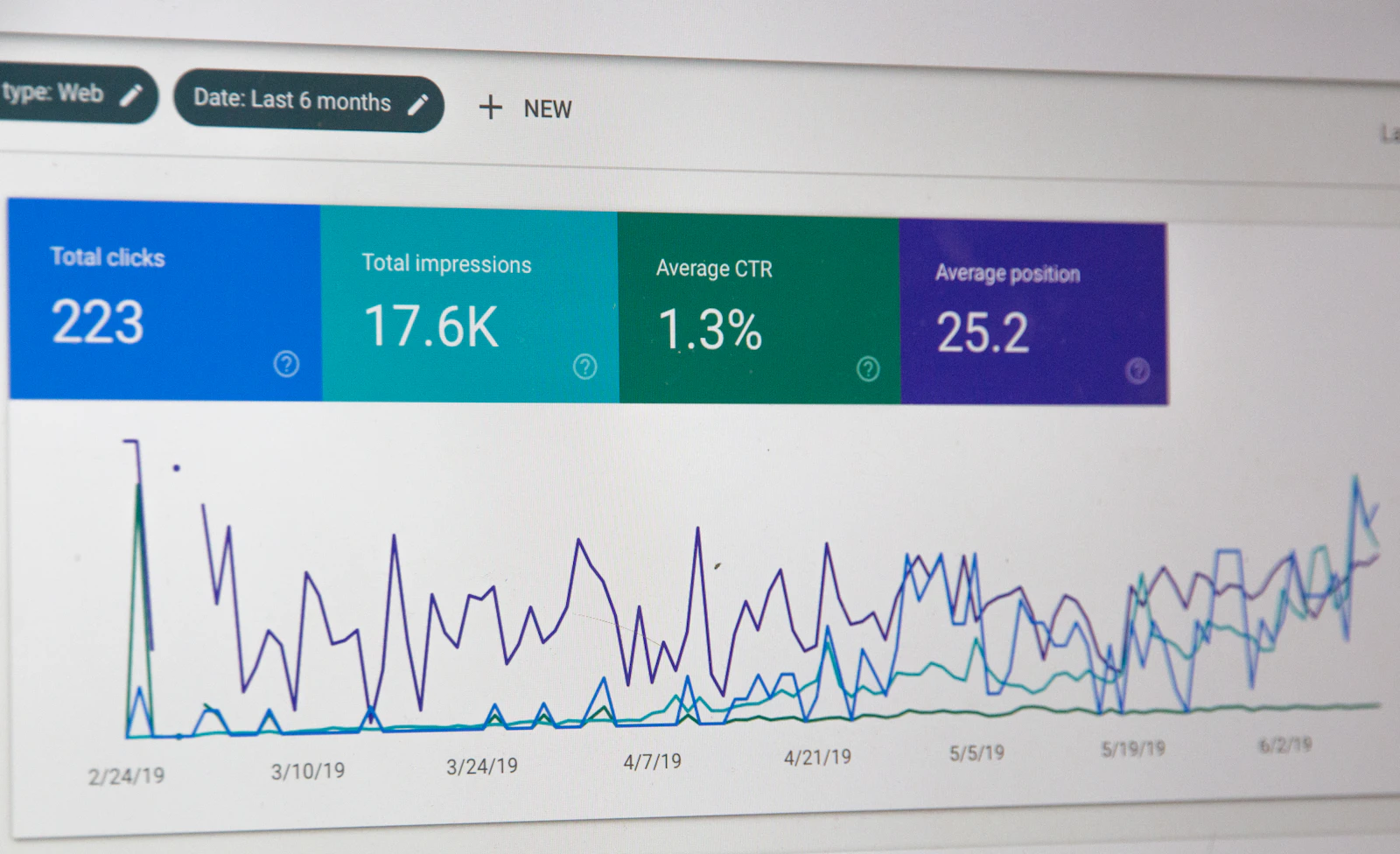

Whenever possible, add links to other pages on the website. By facilitating navigation, this resource can be a good ally in improving the bounce rate (i.e., the volume of users who leave the website after having consulted only one page). This aspect is not trivial, as it is another indicator Google uses when displaying its search results. In fact, a too-high bounce rate can hinder good indexing, as the search engine interprets it as a lack of relevant content.

In the page URL, meaningless alphanumeric combinations should be avoided, replacing them with semantic content as similar as possible to the page title. The main keyword should be included. Prepositions and conjunctions should also be omitted, as their importance for SEO is low. Thus, the webpage containing the article "Steps to create your website" should have a URL similar to the following: www.b2-performance.es/steps-create-website.

They already trust us

Satisfied Clients

Tip: Every page on your website should have a single, clear objective. If you compete with yourself, Google won't know what to rank.

more than 15 years of experience

First consultation free!

Address the crisis with your company's Digitalisation and the best Digital Marketing strategy.


Frequently Asked Questions

Digital marketing agency based in Germany with two offices in Spain. Since 2006, we have helped our clients grow digitally. We have an expert digital marketing team, native to several countries. From our offices in Spain, we work internationally, hand-in-hand with our clients.

We put our resources and experience at your company's service to help you design and implement innovative and profitable strategies. Do not hesitate to contact us. 

C/ Rosselló, 188 4°C, 08008 Barcelona


+34 935 329 378

[email protected]

© by B2 Performance. All rights reserved

¿Necesitas ayuda con tu estrategia?

Nuestro equipo analiza tu situación y te propone un plan personalizado. Sin compromiso.

Solicitar consulta gratuita
Manuel Riveiro

Manuel Riveiro

CEO & Digital Strategist — ZDS

20+ años de experiencia en SEO, performance marketing y herramientas de IA. Fundador de ZDS y B2 Performance, con sede en Barcelona y Herdecke.