For online marketing or a conventional marketing strategy, the first question is: who do we want to sell our products and services to? To answer this, it's essential to understand your ideal client or buyer persona as thoroughly as possible. To get closer to them, segmentation is key.
Segmentation divides the market into various groups based on their characteristics, preferences, and needs. The goal is to provide a differentiated and tailored offering to those who fit the business's target. This optimises available resources and maximises the return on investment (ROI) of programmatic display actions.
Below, we summarise how it can help you with your online strategy.
Segmentation in Digital Marketing (2024-2026)
The digital landscape is evolving. Segmentation is a necessity. With information saturation and users' increasing demand for personalisation, a marketing strategy that doesn't segment will fail. According to a 2024 Statista study, companies implementing advanced segmentation see an average 15% increase in Conversion Rates and a 10% increase in Customer Lifetime Value (CLTV).
The advent of Artificial Intelligence (AI) in search (such as ChatGPT or Perplexity) and Google's algorithm updates, like the “Helpful Content Update” and the emphasis on E-E-A-T (Experience, Expertise, Authoritativeness, Trustworthiness), make understanding our audience more critical than ever. Generic, mass content loses relevance compared to content that directly resonates with the specific needs and intentions of a segment. At ZDS Digital, our clients who invest in deep segmentation achieve better performance metrics and greater brand loyalty.
Segmentation optimises every pound invested, ensuring the right message reaches the right person, at the opportune moment, and through the most effective channel. This is particularly relevant in a privacy-first environment where data analysis is centralised in tools like Google Analytics 4 (GA4), which offers more robust, behaviour-oriented audience segmentation capabilities.
Key Benefits of Effective Segmentation
- Increased Message Relevance: By knowing who we're addressing, we create more persuasive and tailored advertising messages and content.
- Optimisation of Advertising Spend: We avoid wasting resources by impacting audiences that are not relevant.
- Improved User Experience: Personalisation enhances customer satisfaction and strengthens the relationship with the brand.
- Increased Conversion Rate: Relevant messages lead to a higher probability of the user taking the desired action.
- Customer Loyalty: A customer who feels understood and valued will make repeat purchases and become a brand advocate.
- Competitive Differentiation: Intelligent segmentation allows you to stand out in saturated markets by offering unique value propositions.
Types of Segmentation
One of the advantages of programmatic display is the segmentation possibilities it offers. It allows you to target many websites, in a defined way, and among interested users.
Demographic and Psychographic Segmentation: Beyond the Basics
Audience Target
Sometimes we believe that the offline user is the same as the one we'll find online. This isn't always the case. For example, for a perfume, the offline buyer might be in an older target group, while online they are younger. Therefore, we define who we believe our target is in terms of age, gender, interests, and sector. Once the campaign begins, we will optimise our target based on the results.
By 2026, audience segmentation goes far beyond age and gender. Psychographic segmentation, which analyses lifestyle, values, attitudes, and personality traits, is key. Advanced data analytics tools and Customer Data Platforms (CDPs) enable the construction of incredibly detailed buyer persona profiles. For example, for a sports apparel brand, it's not enough to know their audience is between 25 and 35; it's crucial to understand if they are yoga enthusiasts, marathon runners, or home fitness fans, and what values they associate with well-being and sustainability. At ZDS Digital, we use surveys, social media analysis, and website behavioural data (via GA4) to build these rich, actionable profiles.
Common Mistake: Limiting yourself to basic demographic data. This leads to generic messages that don't connect emotionally with the audience.
Quick Win: Conduct surveys with current customers and analyse their social media interactions to identify psychographic patterns.
Geolocation and Hyperlocation

We won't launch a campaign to everyone located in every country. ZDS Digital offers the possibility to segment by location. The difference from many agencies is that we work with hyperlocalisation or hyperlocation. This involves a very specific coordinate-based location, allowing us to target only users who are near that particular location. For example, if a product is sold in specific establishments, we can choose to target users who are near these shops and are browsing the internet.
Hyperlocation has evolved significantly since 2018. Today, we target users near a physical point of sale, and also based on movement patterns or specific events. For example, a campaign for a music festival could target users who have been to similar concert locations in the last 6 months, or those who are within a 5 km radius of the festival venue during the event. Modern advertising platforms, integrated with mobile device location data (with user consent), allow for astonishing precision. This is useful for businesses with physical stores or services that depend on location, such as restaurants, retail shops, or home delivery services.
Practical Example: A coffee shop chain launches "free coffee with your first purchase" ads to users passing by their establishments between 7 and 9 AM, increasing footfall and sales. The key is the contextual relevance offered by hyperlocation.
Time
With programmatic display, we define the time, meaning the hour and day we want to target the buyer persona. In many cases, we are interested in this happening in the afternoon or evening, as the user doesn't browse the web as much during the rest of the day, or perhaps we only want to be present first thing in the morning. To choose the best option, it is necessary to know our target's habits and when they are connected to the internet.

A very interesting aspect is programmatic advertising as a complement to television. That is, when the client's advertisement is shown on television, we display creatives on websites related to the client's service or product during that specific time slot, thereby increasing the frequency of impact in a different and unusual way.
Time-based segmentation has become more sophisticated. Beyond time slots and days of the week, we optimise based on historical ad performance at different times. For example, if GA4 data shows that Conversion Rates for a specific product are 30% higher on Tuesday afternoons between 3 PM and 6 PM, we allocate a larger budget to that period. Integrating GA4 data with programmatic buying platforms allows for dynamic, real-time optimisation.
The "second screen" strategy (complementing television with display) remains highly effective. At ZDS Digital, we have implemented successful campaigns where, for example, during a football match sponsored by a beverage brand, we show ads for that brand on sports apps and sports news websites that viewers are simultaneously consulting on their mobile devices. This reinforces the message and exponentially increases brand awareness.
Quick Win: Analyse the "Time of Day" and "Day of Week" reports in GA4 to identify your audience's activity and conversion peaks. Adjust your bids and campaign timings accordingly.
Weather
If you have a seasonal product or one whose sales volume depends on the weather, we can appear only when a certain temperature is reached in the location we are interested in, or not appear in a specific weather situation.
Weather-based segmentation is an excellent example of how contextualisation drives sales. In 2026, integrations with meteorological APIs are common in programmatic advertising platforms. This allows for real-time campaign activations based on specific weather conditions. For example, an ice cream brand increases its ad spend in cities where the temperature exceeds 25°C. Similarly, a winter clothing store activates campaigns when snow or low temperatures are forecast. This optimises the budget and makes the message relevant to the user at that moment.
Example: A tyre brand segments winter tyre ads to drivers in regions expecting snowfall, or summer tyre ads in areas with high temperatures. Relevance is key for conversion.
Frequency
It is always advisable to define how many impressions we want for the user. If we implement a retargeting strategy, the minimum is two impressions, but we always recommend more, because by only targeting “your user”, the more times we impact them, the more return that user will generate.
Frequency management is crucial to avoid ad fatigue and optimise the budget. While retargeting requires multiple impressions, an excess can be counterproductive. Recent studies (2025) suggest that the "optimal frequency" varies depending on the sector, product type, and audience, generally ranging between 3 and 7 weekly impressions for display campaigns. Exceeding this threshold decreases CTR and increases CPM due to user irritation.
Modern advertising platforms offer advanced frequency controls that allow setting limits per user, per campaign, and per time period. It is essential to monitor frequency and ad performance in relation to it. At ZDS Digital, we dynamically adjust frequency caps based on performance data to maximise ROI and maintain a positive user experience.
Tip: Conduct A/B tests with different frequency caps in your retargeting campaigns to find the optimal point for your audience.
Semantics
Through semantics, you can appear on websites where the content relates to your business. To do this, you need to define a series of keywords. After that, every time a user visits a website that talks about something related to the keywords in question, we will target our user. This type of segmentation is very important, as, combined with many other types of segmentation options, it ensures you reach users with a high probability of converting to a sale.
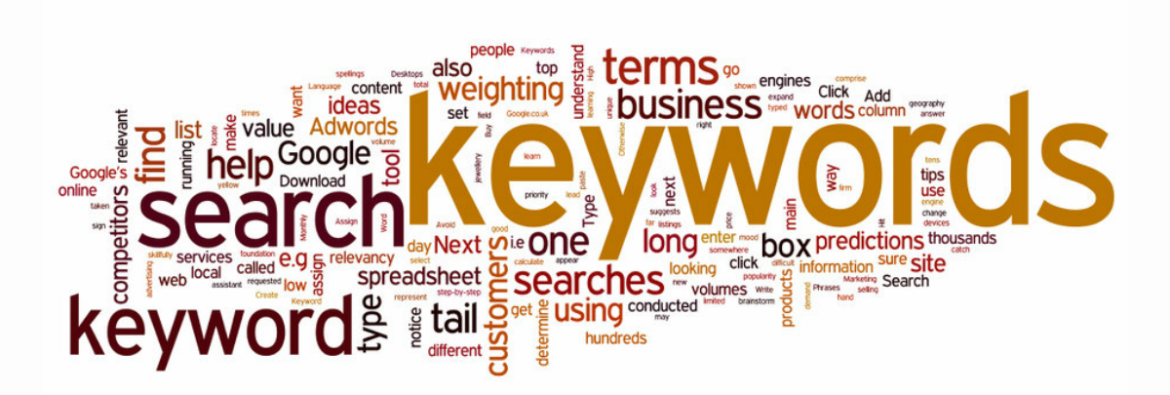
Semantic segmentation, also known as contextual segmentation, has seen a resurgence with privacy concerns and the deprecation of third-party cookies. What was good practice in 2018 is now a fundamental strategy. Instead of relying on user data to infer interests, contextual advertising focuses on the content of the web page the user is currently visiting.
AI and Natural Language Processing (NLP) tools in 2026 allow for much deeper and more precise semantic analysis of web pages. It's no longer just about matching keywords, but about understanding the context, tone, and intent of the content. For example, if a travel brand wants to promote an adventure destination, it appears in articles discussing "hiking in the Pyrenees," "climbing in the Alps," or "mountain bike routes," even if the exact keywords aren't present. This ensures the ad is relevant to the user's immediate interest, increasing the likelihood of interaction.
Recommended Tools: Google Ads (content targeting), Demand-Side Platform (DSP) platforms with advanced contextual targeting capabilities like The Trade Desk or Adform, and content analysis tools like Brandwatch to identify relevant topics and conversations.
Device
We can appear on the devices that interest us: desktop computer, mobile, or tablet. This allows us to create a strategy where, for example, we target the user via their mobile first thing in the morning; mid-morning, via computer; in the afternoon, on mobile; and at night, on any device.
We also define which operating system we want to appear on: Apple, Android, PC Windows, Mac…
Device and operating system segmentation is more critical than ever. With the omnipresence of smartphones, the mobile experience must be flawless. Google's Core Web Vitals, which now include INP (Interaction to Next Paint) instead of FID (First Input Delay) since March 2024, underscore the importance of interactivity and speed on mobile. A device segmentation strategy must go hand in hand with website and creative optimisation for each device type.
At ZDS Digital, we not only segment by device type but also adapt creatives and messages. For example, for mobile users, ads are more concise and visual, with direct Calls to Action like "Call now" or "Download App." For desktop users, we allow ads with more text or longer videos. Operating system segmentation is useful for promoting specific applications or targeting audiences with certain technological preferences (e.g., iOS users for premium products).
Common Mistake: Using the same creatives and landing pages for all devices. This degrades the user experience and reduces mobile conversions.
Quick Win: Ensure your landing pages are fully responsive and optimised for mobile speed. Use Google Search Console to monitor your Core Web Vitals.
Behavioural Segmentation and Advanced Retargeting
Behavioural segmentation is one of the most powerful. It is based on the actions users perform on our website or other platforms.
Retargeting and Custom Audiences in GA4
Retargeting (or remarketing) is a fundamental tactic that greatly benefits from precise segmentation. It involves showing ads to users who have already interacted with our brand. With Google Analytics 4 (GA4), the possibilities for creating custom audiences are much more flexible and powerful than in Universal Analytics.
- Visitors to specific pages: Users who viewed a product but did not purchase it.
- Users who abandoned their cart: One of the most valuable audiences, with high Conversion Rates.
- Users who performed a specific action: For example, registered for a webinar, downloaded an ebook, or watched a video.
- Returning customers: To offer them complementary products or special promotions (cross-selling/up-selling).
- Inactive users: Those who haven't visited the site in a while, to try and re-engage them.
At ZDS Digital, we use GA4 to build very granular audiences, for example, "Users who viewed at least 3 products from category X in the last 7 days but did not purchase." These audiences are then synchronised with Google Ads or other advertising platforms to show them highly personalised ads, perhaps offering a discount or highlighting key features of the product they viewed.
Segmentation Based on Search Intent
With the evolution of search (AI Search, Perplexity), understanding the intent behind a query is vital. SEM (Search Engine Marketing) segmentation is not limited to keywords, but to groups of keywords that reveal a specific intent: informational, navigational, transactional, or commercial. For example, someone searching for "best running shoes 2024" has a different intent from someone searching for "buy cheap running shoes." Adapting ads and landing pages to these intents increases relevance and CTR.
Quick Win: Group your keywords in Google Ads by search intent and create specific ads and landing pages for each group. Monitor the quality of your keywords and the performance of your ads.
Privacy and Ethical Considerations in Segmentation (Privacy-first)
In the "Privacy-first" era, segmentation must be carried out with complete transparency and respect for user privacy. Regulations like GDPR in Europe or CCPA in California have transformed how data is collected and used. It is essential to:
- Obtain explicit consent: For data collection and cookie usage.
- Anonymise and aggregate data: Whenever possible, work with aggregated data rather than individual identifiers.
- Offer opt-out options: Allow users to opt out of advertising segmentation.
- Be transparent: Clearly inform users about how their data is used in privacy policies.
At ZDS Digital, we ensure that all our segmentation strategies comply with current privacy regulations, building trust with the audience and ensuring the long-term sustainability of campaigns.