
Skip to content

Glossary Inbound Marketing

What Is Inbound Marketing?

  • Content Marketing
Definition

Inbound marketing is a methodology that attracts potential customers with useful, relevant content instead of interrupting them with unsolicited advertising.

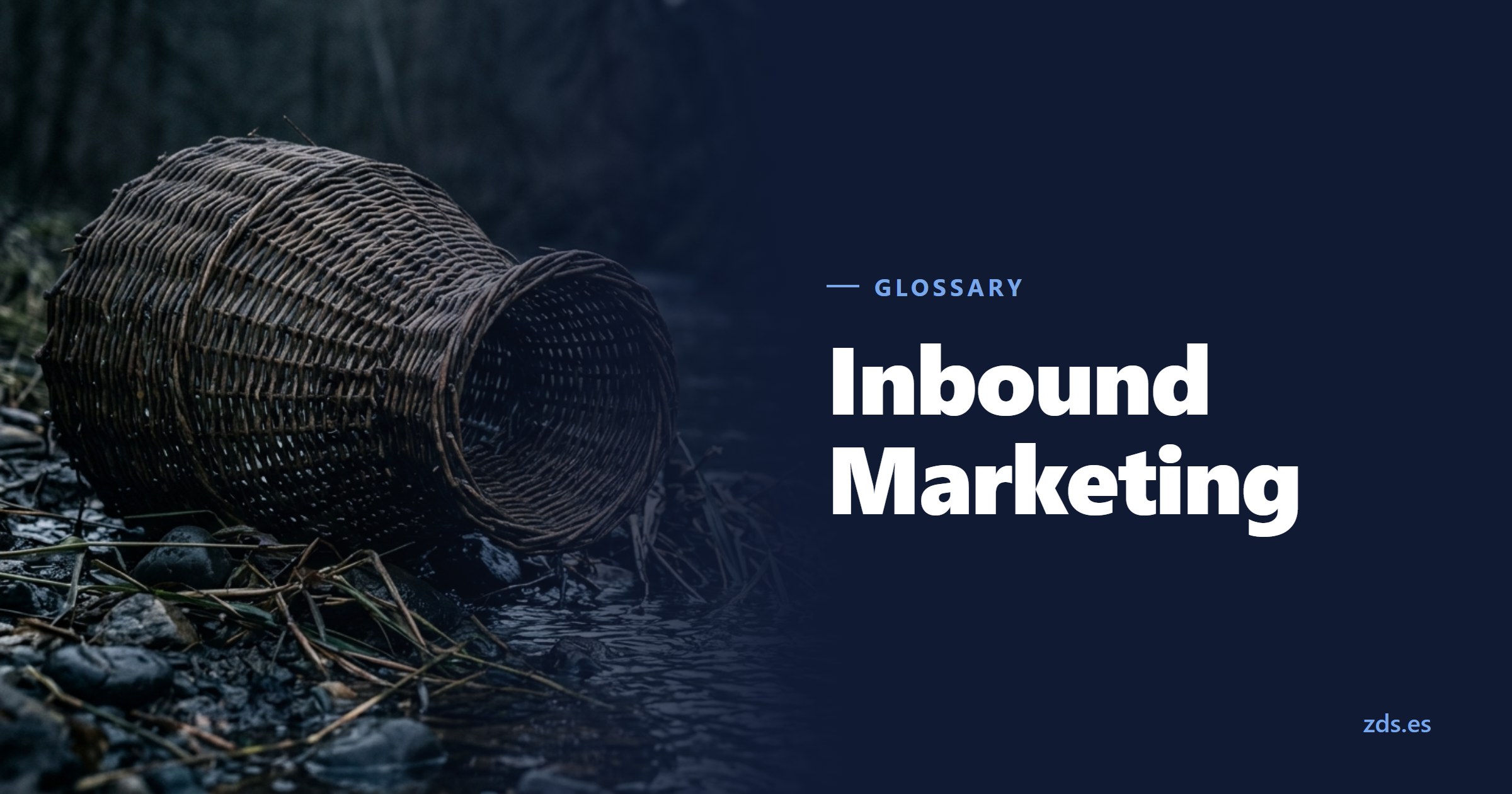
A wicker fish trap on the bank, its mouth facing the current — beside the title Inbound Marketing
The trap waits; it chases nobody
On this page 6
  1. What is inbound marketing?
  2. Inbound marketing versus outbound marketing
  3. How it works
  4. Why it matters
  5. Best practices
  6. Common mistakes
In brief

Where the term comes from, the four stages that originally shaped it, and how it fits with concepts you already know, such as SEO, CRM or the customer journey.

A wicker fish trap on the bank, its mouth facing the current — beside the title Inbound Marketing
The trap waits; it chases nobody

What is inbound marketing?

Inbound marketing is a marketing methodology that attracts potential customers with relevant content and useful experiences, instead of interrupting them with unsolicited advertising. The core idea is simple: rather than chasing an audience, a brand publishes something that audience is already looking for and lets people find it on their own.

The term is generally credited to Brian Halligan, who co-founded HubSpot with Dharmesh Shah in 2006 and began using it around that time. Halligan and Shah later formalized the concept in the book Inbound Marketing (2009), where they described a full method for attracting visitors, turning them into contacts, and guiding them toward a purchase.

The concept sits inside something broader: the customer journey, the full path a person follows from noticing a problem to solving it, and in many cases well beyond the purchase itself. Inbound marketing is the methodology a company uses to accompany that path, especially in its early stages, when a prospect has not yet decided who or what to buy.

Inbound marketing versus outbound marketing

AspectInbound MarketingOutbound Marketing
ApproachPull: attracts with relevant, useful contentPush: interrupts with advertising aimed at a broad audience
Starting pointThe person is already looking for information or a solutionThe brand decides who to target, without that search happening first
Typical examplesBlog posts, SEO, social media, newslettersTV ads, cold calls, unsolicited marketing email
Cost per contactDrops over time, scales with content already publishedResets with every campaign, without building on itself

Neither approach fully replaces the other in practice. Many companies combine a well-ranked blog with paid advertising, though the balance between the two shifts by industry and budget.

How it works

The classic inbound marketing model organizes the work into four stages: attract, convert, close and delight. That's not the only way to describe the process, HubSpot has simplified it to three stages in recent years, but it remains the most widely cited framework.

In the attract stage, the goal is for the right person to find the content before they even start actively searching for a vendor. This is where organic search and technical SEO come in: without search visibility, even great content reaches no one. Content marketing plays a central role at this stage, but inbound marketing goes further: it isn't limited to producing articles, it combines SEO, social media and email into one strategy.

For that content to make sense, a brand needs to know who it's for. Defining a buyer persona and narrowing down a target audience keeps content from being written for everyone and, in practice, for no one in particular.

In convert and close, an anonymous visitor becomes a contact, then a customer. A form that offers something in exchange for an email address, a newsletter that keeps the contact warm, a webinar that digs into a specific problem: these are typical tools at this stage, paired with a CRM that organizes those contacts so none of them get lost.

The delight stage comes after the sale. It means continuing to deliver value so the customer comes back or recommends the brand, rather than being left alone once they pay.

Why it matters

Inbound marketing matters because it changes who controls the first contact. Instead of the brand deciding when to interrupt, the person decides when they step into the journey, usually right when they have a real problem to solve. That tends to produce better-qualified contacts, because they arrive with an actual need rather than having been forced to pay attention.

It also changes the economics of marketing over the medium term. A well-ranked article keeps drawing visits months after it's published, while an ad campaign stops producing results the moment the budget runs out. That doesn't mean inbound is free: it takes time before results show up, plus steady content effort that many companies underestimate at the start.

It also fits how a buyer's customer journey actually moves today: before ever talking to a salesperson, most people have already researched on their own, compared options, and read reviews. Inbound marketing places useful content at each of those points, instead of waiting for the buyer to show up only at the very end of the process.

Best practices

  • Define who you're talking to first, with a concrete buyer persona and target audience, before writing the first article.
  • Prioritize the topics that audience is already actively searching for, not what the company feels like announcing.
  • Take care of technical SEO from the start: a blog with excellent content and poor indexing gets read by almost no one.
  • Offer something of real value in exchange for an email address, not an empty form that only collects data.
  • Centralize contacts in a CRM from the very first lead, so the history of each conversation doesn't get lost.
  • Keep delivering useful content after the sale: the delight stage generates referrals no campaign can buy.

Common mistakes

  • Publishing content without first defining a clear buyer persona, which scatters the message across different audiences.
  • Measuring only blog visits and not whether those visits actually turn into contacts and customers.
  • Stopping value delivery after the sale, as if the delight stage weren't part of the methodology.
  • Expecting immediate results: inbound marketing takes time to gain traction because it depends on accumulated content, not a single campaign.
  • Focusing only on the attract stage and neglecting the rest: without convert and close, traffic never turns into customers.
Manuel Riveiro Rodriguez CEO & Digital Strategist

A technical audit covers this and everything else in one pass.

Request an audit

Frequently asked

What's the difference between inbound marketing and content marketing?

Content marketing is a tool: producing articles, videos or guides. Inbound marketing is the full strategy that content fits into, alongside SEO, social media, email and CRM, to attract, convert and retain a customer.

What are the four stages of inbound marketing?

Attract, convert, close and delight. Attract brings the right person to the content, convert turns them into a known contact, close turns them into a customer, and delight keeps that relationship going after the purchase to generate referrals.

How long does inbound marketing take to show results?

There's no fixed timeline, but it's rarely immediate: it usually takes several months to generate steady traffic, since it depends on content that ranks over time. In exchange, that content keeps attracting visits long after it's published, something a paid campaign doesn't do.

Does inbound marketing work for any type of company?

It works best when buyers research before deciding, common in B2B and for higher-value purchases. In highly impulsive purchase categories, inbound tends to carry less weight and works best combined with other acquisition channels.

Who popularized the term inbound marketing?

It's credited to Brian Halligan, who co-founded HubSpot with Dharmesh Shah in 2006 and began using the term around that time. The concept was later formalized in their book Inbound Marketing, published in 2009.