
Skip to content

Glossary Magento

What is Magento? Open Source vs Adobe Commerce

  • SEO Basics
Definition

Magento is e-commerce software written in PHP for building and running online stores. It comes in two editions that share one code base: Magento Open Source, which anyone can download under the Open Software License 3.0, and Adobe Commerce, the licensed edition sold by Adobe. Adobe has owned Magento since June 2018. The merchant runs it on their own servers or uses one of Adobe's cloud offerings.

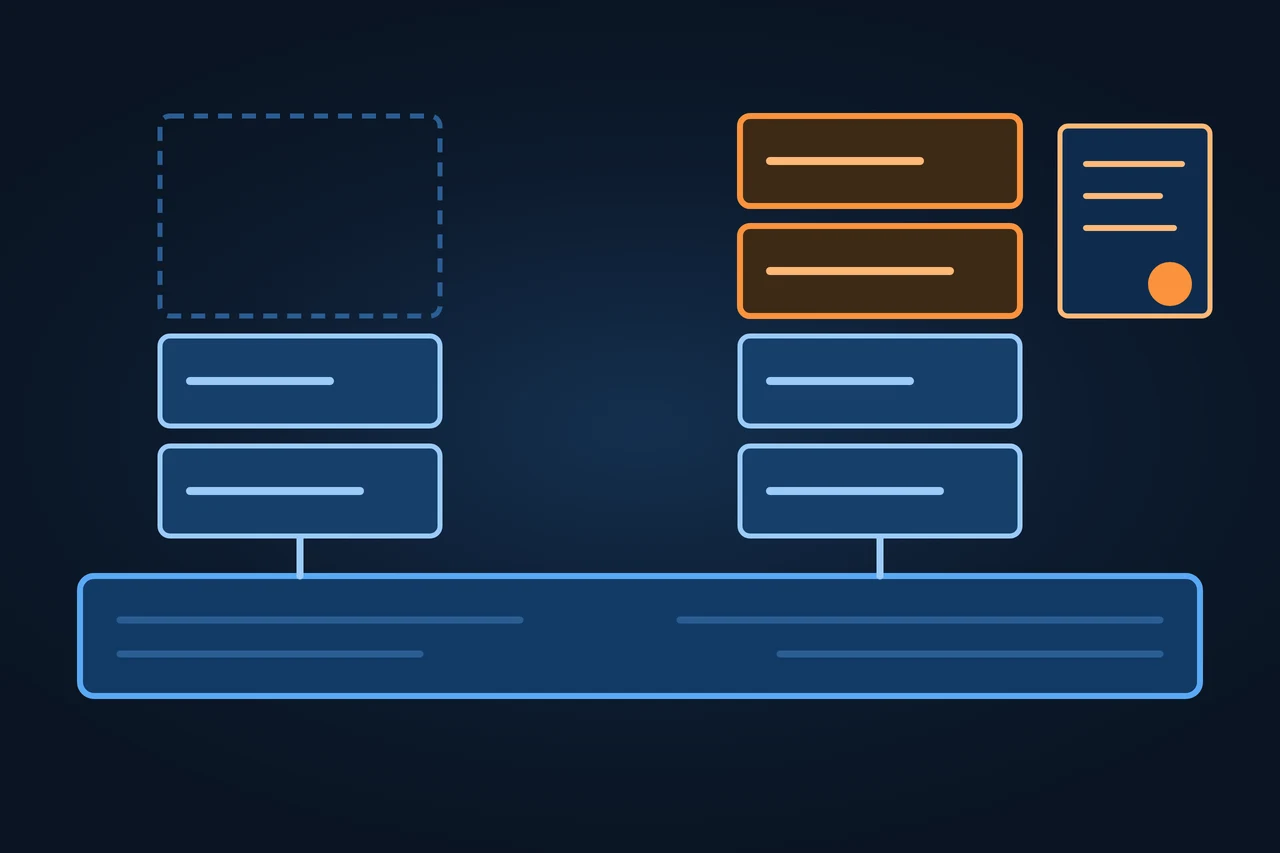
At the bottom, a wide shared base; on top of it, two versions: on the left, two blue blocks below an empty space with a dashed border; on the right, the same two blocks with two orange ones above them and, beside them, a sheet with an orange seal, on a dark blue ground.
On this page 14
  1. History and development
  2. How it works
  3. Types and variants
  4. Examples
  5. How to measure it
  6. Advantages and disadvantages
  7. How it differs from related concepts
  8. Tools
  9. Criticism and limits
  10. Legal framework
  11. How to apply it, step by step
  12. Best practices
  13. Common mistakes
  14. How this entry was made
In brief

Magento: PHP e-commerce software, free as Magento Open Source and licensed as Adobe Commerce. Differences, history, costs and limits.

At the bottom, a wide shared base; on top of it, two versions: on the left, two blue blocks below an empty space with a dashed border; on the right, the same two blocks with two orange ones above them and, beside them, a sheet with an orange seal, on a dark blue ground.

History and development

Magento was built by Varien, a web development company. The milestones, as documented in the original announcements and in Adobe's sources:

  • April 2007: magentocommerce.com announces Magento as an open-source e-commerce solution, "Coming Summer 2007". The page credits Varien. Preview versions follow over the next months.
  • 31 March 2008: Varien announces the production release of Magento 1.0.
  • 17 November 2015: Magento 2.0 is released on GitHub. It is a new major version; Adobe later speaks of merchants who "migrated" to it.
  • 19 June 2018: Adobe completes its acquisition of Magento. Magento Commerce Cloud becomes part of Adobe Experience Cloud, and Magento's CEO Mark Lavelle stays on to lead the team.
  • 30 June 2020: support for the Magento 1.x line ends, for the licensed edition (then called Magento Commerce) and for Magento Open Source alike. Adobe had announced the date in September 2018 and issued no further patches afterwards.
  • 28 July 2020: version 2.4.0 is released, the line that is still current today.
  • 12 May 2026: version 2.4.9 is released. Adobe lists it as the latest version on 13 November 2026.

Today Adobe sells the licensed edition under the name Adobe Commerce. The free edition is still called Magento Open Source.

How it works

Magento is a PHP application. It needs a web server, a database, a search engine and a cache. Adobe's installation guide lists what a merchant running it on their own infrastructure looks after, among them Nginx or Apache, PHP, MySQL or MariaDB, OpenSearch, Redis, RabbitMQ and Varnish, plus backups, monitoring and security patches for the operating system.

Both editions use the same framework, and Adobe documents them in a single architecture guide. The code is organised in modules. A theme controls what the storefront looks like, and extensions add functions. Adobe runs the Commerce Marketplace for extensions and themes.

One installation can hold several shops. Adobe's documentation describes a hierarchy of websites, stores and store views:

  • A website has its own domain. One installation can run several.
  • A store sits under a website and has its own main menu. The stores of a website share the product catalogue, the Admin and the checkout.
  • A store view is the version of a store that customers see, typically one per language.

Settings cascade from global to website, store and store view. Adobe describes native support for several languages, currencies and tax rules in one installation.

For storefronts built separately from the shop engine, and for mobile apps, Adobe Commerce provides GraphQL APIs. How that architecture works is explained under headless commerce.

Each level takes its settings from the one above

Types and variants

Magento Open Source and Adobe Commerce share one code base under two licences. The COPYING.txt file in Adobe's magento2 repository says each source file is licensed under OSL 3.0 or under the commercial licence, and that for licensees who pay the fees the commercial licence takes precedence. Adobe Commerce adds functions on top of the shared core, for example the B2B extension with company accounts, buyer roles, shared catalogues with company-specific prices and negotiable quotes.

Magento Open SourceAdobe Commerce
LicenceOSL 3.0, no licence feeCommercial licence from Adobe, subject to fees
Where it runsOn a server the merchant choosesOn-premises, on Adobe's cloud infrastructure (PaaS) or as Adobe Commerce as a Cloud Service (SaaS)
SupportCommunity forum and documentationAdobe support for the core application, with updates and security patches

Source: magento/magento2 repository on GitHub and Adobe Experience League, consulted on 18.11.2026.

Adobe Commerce itself comes in three deployment models:

  • On-premises: the merchant hosts and manages the servers, the database, search, caching and the CDN. Adobe supports the core application (as of 8 October 2026).
  • Adobe Commerce on cloud infrastructure: a Platform as a Service on AWS or Azure, with a Git-based workflow that builds and deploys the code on every push (as of 9 November 2026).
  • Adobe Commerce as a Cloud Service: the SaaS version, run on Adobe's infrastructure. Its storefront is fully headless and does not support the classic Luma theme, so stores that move to it need a new storefront (as of 11 November 2026).

There is also a community line outside Adobe. The Mage-OS Association, founded by community members in 2021 and registered in Poland in 2022, publishes the Mage-OS Distribution. It is built on the Magento Open Source code base and is not affiliated with Adobe.

Examples

Three set-ups that Adobe's own documentation describes, without client data:

  • One installation for two countries: two websites, each with its own domain, and a store view per language. The catalogue is maintained once, and each store can show its own selection of products and its own design.
  • A B2B store: a company account groups several buyers from one business, each with a role and purchasing permissions. Adobe gives the example of a store manager or buyer ordering on behalf of a company. The company can pay on account, on a credit line set by the merchant.
  • A move to SaaS: a store on Adobe Commerce on cloud infrastructure that switches to Adobe Commerce as a Cloud Service has to replace its Luma storefront, because the SaaS version only supports the new headless storefront.

How to measure it

Measuring a Magento shop starts with what it costs to run. The usual items, without figures because they depend on the provider and the project:

ItemType of costComment
LicenceRecurringOnly Adobe Commerce; Magento Open Source has no licence fee
HostingRecurringOwn servers, or part of Adobe's cloud offerings
Extensions and themesOne-off or recurringMarketplace and third-party vendors
DevelopmentOne-offSet-up, design, integrations with ERP or PIM
MaintenanceRecurringVersion upgrades, security patches, monitoring
Payment feesPer saleSet by each payment provider

Source: Adobe Experience League and the magento/magento2 repository, consulted on 18.11.2026.

Search traffic is measured outside the shop: Google Search Console shows which category and product pages appear in Google and how many clicks they get.

Advantages and disadvantages

It depends on the shop:

CaseForAgainst
Large catalogue with many attributesLayered navigation by category, price and attributes is built inNeeds a properly sized server, search engine and cache
B2B with company accountsAdobe Commerce has company accounts, shared catalogues and quotesThese functions come with the licensed edition
Several countries in one installationWebsites, stores and store views share one catalogueEach level adds configuration work
Small shopMagento Open Source has no licence feeRunning the servers and the updates takes technical staff

Source: ZDS assessment based on Adobe Experience League, consulted on 18.11.2026.

How it differs from related concepts

Several systems compete with Magento. Each comparison is explained in one entry; here is the short version:

SystemModel and licenceWho hostsWho maintains the server
Magento Open SourceOpen source, OSL 3.0The merchantThe merchant
Adobe CommerceCommercial licence from AdobeThe merchant or Adobe (PaaS, SaaS)The merchant or Adobe, depending on the model
ShopwareCommunity Edition under MIT, plus paid plansThe merchant, or Shopware (PaaS, SaaS)Depends on the model
PrestaShopOpen source, OSL 3.0 for the coreThe merchant, or PrestaShop (Hosted)The merchant, or PrestaShop with Hosted
WooCommerceOpen-source plugin for WordPressThe merchantThe merchant
ShopifyPlatform with a subscriptionShopifyShopify

Source: GitHub repositories and the manufacturers' websites, consulted on 18.11.2026.

Shopware is the closest comparison in the German-speaking market; the differences between the two are explained in the Shopware entry. The comparison with Shopify is in the Shopify entry.

Magento is not a CMS in the strict sense. It has CMS pages for content, but its job is the catalogue, the checkout and the orders.

Tools

Examples by category, in alphabetical order, with no ranking:

  • Community distribution: Mage-OS Distribution, from the Mage-OS Association.
  • Extension store: Adobe Commerce Marketplace, with extensions and themes.
  • Frontend: Hyvä, a storefront for Magento 2 rebuilt from the ground up on Magento's own PHP templates.
  • Search: Live Search, an Adobe service with its own GraphQL schema.

Criticism and limits

Running Magento takes work. On its own infrastructure the merchant is responsible for servers, PHP, the database, search, caching, backups, monitoring and security patching. Adobe's installation guide expects intermediate technical knowledge and server access.

Each version has a limited life. Adobe gives each version three years of standard support from its release date. From 1 June 2027 it will no longer keep Cloud environments running on unsupported versions and may suspend their traffic, which takes the storefront offline.

Major version changes are expensive. Adobe described the step from Magento 1 to Magento 2 as a migration, and Magento 1 extensions disappeared from the Marketplace after 7 July 2020. Every extension and every customisation also adds code the server has to run, which shows up in the Core Web Vitals.

How to apply it, step by step

  • Decide between Magento Open Source and Adobe Commerce, and for Adobe Commerce choose the deployment model.
  • Check the server against Adobe's current system requirements.
  • Plan websites, stores and store views before importing the catalogue.
  • Set up URL rewrites for categories and products. When you create a URL rewrite, Commerce automatically adds a permanent redirect (301) from the old address.
  • Decide which layered navigation filters may be indexed, as explained under faceted navigation.
  • Add product structured data and test it.
  • When migrating from Magento 1 or another system, map every old URL to a new one and redirect it, as explained under 301 redirect.

Best practices

  • Install security patches as soon as Adobe publishes them.
  • Plan version upgrades within the three-year support window.
  • Test updates and extensions on a copy of the shop first.
  • Keep the number of extensions low.
  • Measure loading speed after every new extension or theme change.

Common mistakes

  • Treating Magento Open Source as free to run because the licence is free.
  • Letting every filter combination create an indexable URL.
  • Staying on a version after its support has ended.
  • Migrating to Magento 2 or to the SaaS version without a redirect plan.
  • Building on a theme the target deployment model no longer supports.

How this entry was made

This entry was written in November 2026 with AI assistance. The facts come from Adobe's documentation and blog, the magento/magento2 repository on GitHub, the Internet Archive copies of magentocommerce.com and magento.com, the Mage-OS and Hyvä websites, EUR-Lex, the BOE and gesetze-im-internet.de, consulted on 18.11.2026. It was reviewed before publication and contains no client data.

Manuel Riveiro Rodriguez CEO & Digital Strategist

A technical audit covers this and everything else in one pass.

Request an audit

Frequently asked

Is Magento the same as Adobe Commerce?

They share one code base. Magento Open Source is the free edition under OSL 3.0. Adobe Commerce is the licensed edition sold by Adobe, with additional functions such as B2B and with cloud deployment options.

Is Magento free?

Magento Open Source has no licence fee. Running a shop on it still costs money: hosting, extensions, development and maintenance. Adobe Commerce requires a paid licence.

Is Magento a CMS?

Not in the strict sense. Magento is shop software. It includes CMS pages for content, but its core is the catalogue, the checkout and order management.

Is Magento still supported?

Magento 2 is. Adobe gives each version three years of standard support, and version 2.4.9 was released in May 2026. Magento 1 has had no support since 30 June 2020.

Who owns Magento?

Adobe. It completed the acquisition on 19 June 2018. Magento was originally developed by Varien, which released version 1.0 in March 2008.

Sources

  1. Adobe, "Magento Open Source".
  2. Adobe, "Adobe Commerce (Magento)".
  3. GitHub, magento/magento2 repository, COPYING.txt and releases 2.0.0, 2.4.0 and 2.4.9.
  4. Internet Archive, magentocommerce.com, "Magento - An Open Source eCommerce Solution - Coming Summer 2007", 8 April 2007.
  5. Internet Archive, Magento blog, "Magento 1.0 has arrived!", 31 March 2008.
  6. Adobe Blog, "Adobe Completes Acquisition of Magento Commerce", 19 June 2018.
  7. Internet Archive, Magento, "Support for Magento 1 Software Ends June 30, 2020".
  8. Adobe Experience League, "Product Availability".
  9. Adobe Experience League, "Software lifecycle policy".
  10. Adobe Experience League, "On-premises installation overview".
  11. Adobe Experience League, "Commerce on Cloud Infrastructure".
  12. Adobe Experience League, "Adobe Commerce as a Cloud Service overview".
  13. Adobe Experience League, "Introduction to Adobe Commerce B2B".
  14. Adobe Experience League, "Site, store, and view scope".
  15. Adobe Experience League, "URL rewrites".
  16. Adobe Experience League, "Layered navigation".
  17. Adobe Developer, "Architecture Guide".
  18. Adobe Developer, "GraphQL overview".
  19. Adobe Commerce Marketplace.
  20. Mage-OS, "About the Mage-OS Association".
  21. Hyvä, "Where Good eCommerce Stores Begin".
  22. EUR-Lex, Directive (EU) 2023/2673 of the European Parliament and of the Council of 22 November 2023.
  23. BOE, Ley 34/2002 de servicios de la sociedad de la información y de comercio electrónico (LSSI), consolidated text (in Spanish).
  24. gesetze-im-internet.de, § 356a BGB, "Elektronische Widerrufsfunktion bei Fernabsatzverträgen" (in German).